|
June 2, 2010
On the ABC's Q+ A this week the spectre of the niqab and the burqa appeared along with the issue of its banning. In recent months, several European governments (Belgium, France, Italy) have begun to legislate restrictions on both the niqab, a face veil that leaves the area around the eyes clear and is usually combined with a full body covering, and the burqa, which covers the entire face and body, leaving just a mesh screen to see through.
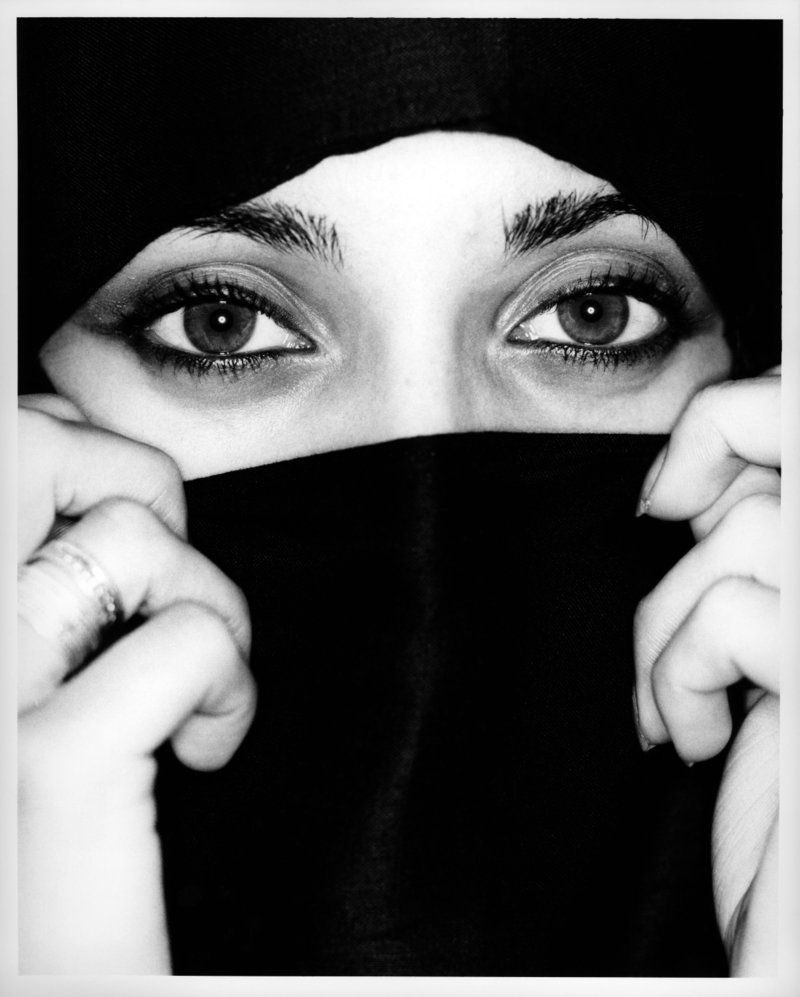
On the right, the veil and burqa is seen as a threat to Australian and in particular a mono culture (Christian?) culture; a symbol of a foreign, belligerent faith community, the "other" - even though few Muslim women wear it-- and a security issue.
It is not just conservatives uncomfortable with multiculturalism who say that the veiling of the face is inherently suspicious and that it may even be a threat to national security. It an issue that crosses the left right divide.
On the left the burqa is seen as a repressive garment that subjugates women and violates their rights. The burqa, the niqab, or any clothing that covers the whole female body including the face, is a powerful symbol of the oppression and subjugation of Muslim women. It is an obvious reminder of how the Taliban, who required women to wear the burqa, systematically abused the fundamental rights and freedoms of Afghan women, leaving them with the lowest life expectancy in the region and highest rates of maternal death.
The ban is being sold by both Right and left as a measure to liberate oppressed Muslim women from the “walking prison” of their burqas that undermines their dignity. It is a divisive issue--- for instance I like the headscarf but I'm uneasy with the burka. The scarf cannot simply be written off as a symbol of oppression, and wearing the headscarf represents her choice to practice her religion while still participating actively in Australian society.
Laurie Penny, blogging at the New Statesman, says:
perhaps the most fundamental question about the veil debate... is not to what extent the veil can be considered oppressive, but whether it is ever justifiable for men to mandate how women should look, dress and behave in the name of cultural preservation. Male culture has always chosen to define itself by how it permits its women to dress and behave....In seeking to restrict the free choice of women to dress as they please, whether in a burqa, a bolero or a binbag, European governments are not protecting women but mounting a paranoid defense of their own right to determine feminine behavior.
In this debate the voices of Muslim women are strangely absent.
What is raised is the issue of individual freedom, individual rights and liberalism in the context of the anti-immigrant backlash and the xenophobic element in the post 9/11 environment. Banning the burqa fundamentally undermines the rights of Muslim women who have made a free and informed decision to wear such coverings, and value the space to practice their religion in public. It also undermines gender equality and tolerance.
|





I just don't get it.... if the women are not being FORCED to wear the garments (and I've heard many Muslim women say they do it out of choice)... then what's the problem?
If their ARE being coerced into dressing a certain way to appease the men-folk... then some sort of legislation many be needed.
And while we're at it, let's look at banning topless barmaids. I suspect most of them feel "pressured" and would rather just serve beer fully clothed. Oh, or maybe they're being empowered by the "raunch culture"... or something.