|
May 14, 2012
The anti-austerity coalition (Syriza), which emerged from inconclusive elections as the most popular force in Greece, refuses to participate in a national unity government to implement the unpopular austerity policies. They want a moratorium on debt payments and aggressive debt write-offs.
The mainstream New Democracy and Pasok parties were hammered at the ballot box for supporting the harsh terms of a debt relief deal (cutbacks and reforms) drawn up by the EU, the International Monetary Fund and the European Central Bank to keep the heavily indebted economy afloat and repay the debt.
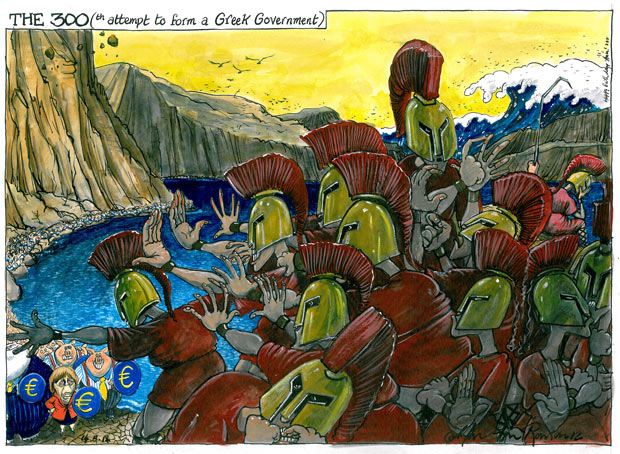 Martin Rowson
The current round of domestic political negotiations is unlikely to lead to a government being formed, especially one that could continue to implement the terms of the bailout. There will probably be new elections.
Greece's immediate future under the austerity deal is a contraction of the Greek economy by 20%, a jump in unemployment toward 25%, a full-blown humanitarian crisis in the urban centres, and a completely unmanageable public debt. Greece is being forced into Greece into a depression and its population is rebelling against the dictates from Berlin.
The rhetoric from Berlin is that there is no alternative to the agreed consolidation program if Greece wants to remain a member of the euro zone. It is the business-as-usual choice ---“The debts must be paid!” This path increasingly leads to social upheaval, default and exit from the eurozone.
|





new elections in Greece