|
October 10, 2012
As Michelle Grattan notes the first three months of carbon pricing (she continues to calls it a carbon tax) have been an anti-climax even though Abbott seeks to keep the tax as centre of his campaigning. She also notes that climate change has turned from an emotional rallying cry to a practical policy challenge with all the accompanying difficulties.
That is a reasonable interpretation of the current state of play in Australia---the carbon price framework and the renewable energy target orients the country in the right direction, and they provide the long term predictability and stability necessary to decarbonize the economy. The immediate target is to get to 20% renewables by 2020.
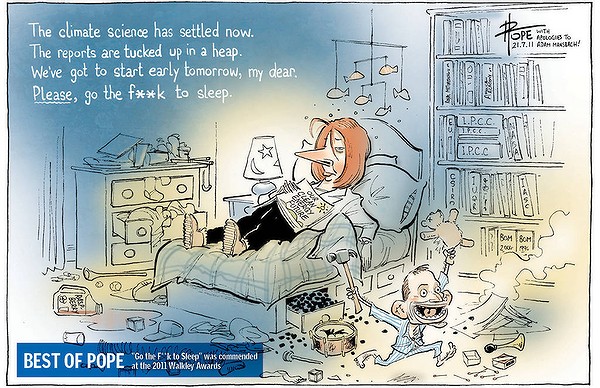 David Pope
What Grattan does not say is that the core policy issue has shifted to electricity and the growth of renewables. Energy has become a fiercely contested policy space due to the policy of phasing out fossil fuels and replace them with renewable energy and other forms of very low emission energy.
There is the large gap between wholesale and retail price of electricity; the fight against the increasing supply of renewable energy (wind and solar photovoltaic) to protect the interests of the fossil fuel generators; and the structural barriers in the way of renewable energy that have been created by the electricity market rules to protect the electricity market operators.
Big Energy is waging a fear campaign whilst the Gillard government’s ministers are fighting backroom battles among themselves (Martin Ferguson, the energy and resources minister, is pro-fossil fuels).
We know that the states have been increasing prices due to infrastructure gold-plating ----one sixth of our national electricity networks ($11 billion in infrastructure) caters for peak events that last for barely four days per year.
There is $45 billion that’s going to be spent in the next five years on new poles and wires and gold-plating the system. That means increased prices for consumers because the rules of the National Electricity Market allow the networks to pass on their costs by charging consumers for upgrading their infrastructure. This gold plating gives the states that own the fossil fuel generators (eg.,Queensland and NSW) a profit stream from the existing system. The Victorian government, which privatised its electricity generators has been captured by Big Energy.
These states are opposed to regulatory reform and the big energy companies have a exceptionally well-honed ability to game their system through strategic lobbying and because of the power they hold in Australia’s economy. To date, the costly and uneconomic nature of clean energy has been the most effective argument wheeled out by fossil fuel industries protecting their turf.
However, the problem they face is that rising electricity prices themselves is driving the installation of household solar and making their households more energy efficient. Reduced demand means reduced project for Big Energy. Solar threatens the existing business models of retailers and wholesalers.
|





" the fight against the increasing supply of renewable energy (wind and solar photovoltaic) "
One of those anti-renewable groups is the Landscape Guardians, an astroturf group with with its links to the climate denialist movement. They are anti-wind and aim to kill off the wind industry.