|
October 18, 2012
The Productivity Commission's Draft Report on the regulatory framework of electricity networks is a further nail in the coffin of the Liberal's scare campaign around carbon pricing. It means people not taking their views taken seriously, even though they are entitled to hold or express those views. They've lost the argument.
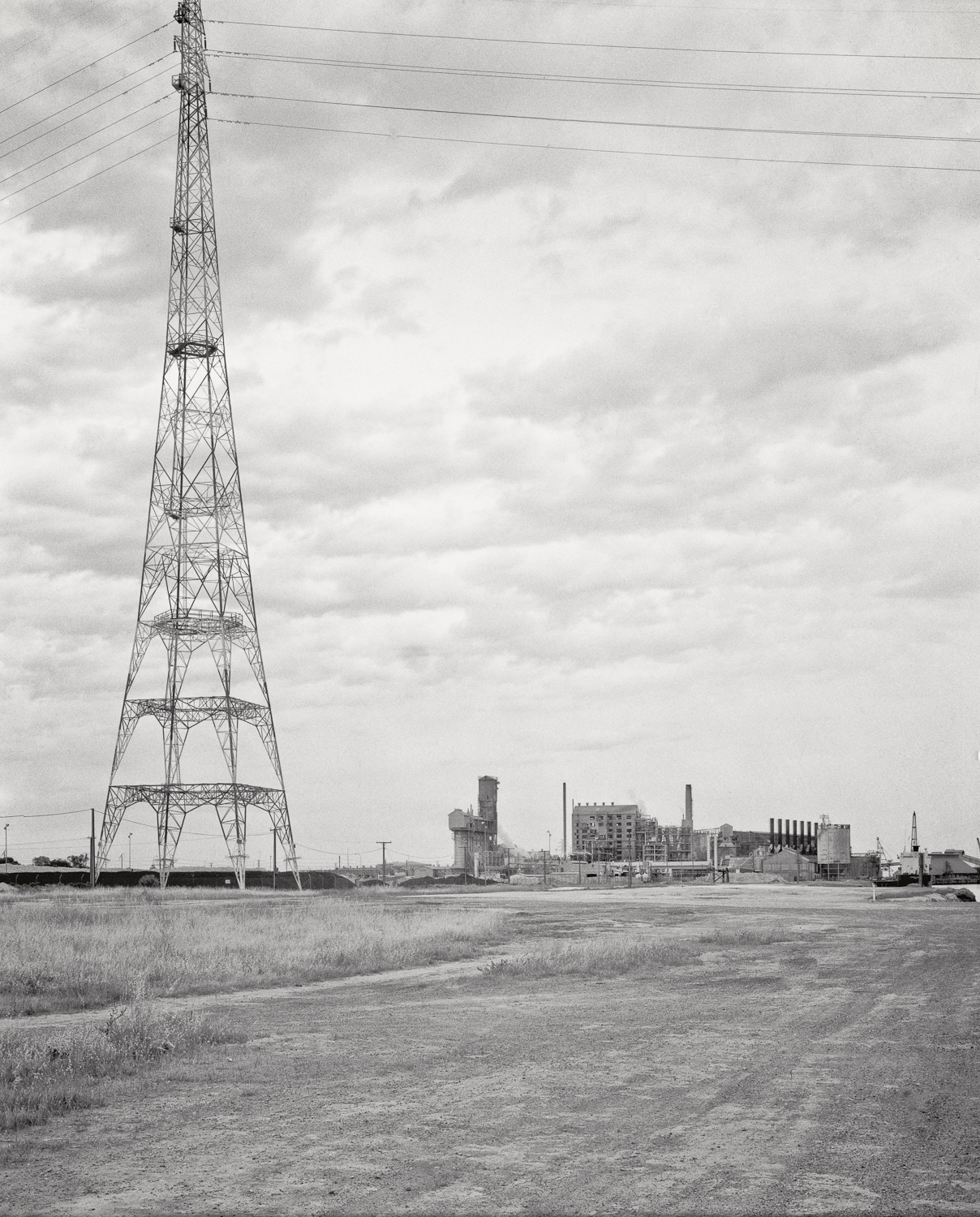 Gary Sauer-Thompson, Electricity Pylon + Osborne Power Station, South Australia
The PC report states:
Electricity prices have risen by more than 50 per cent in real terms over the past five years. Spiralling network costs are the main contributor to these increases, partly driven by inefficiencies in the industry and flaws in the regulatory environment.....Some 25 per cent of retail electricity bills are required to meet around 40 hours of critical peak demand each year....The overarching objective of the regulatory regime is the long-term interests of electricity consumers. This objective has lost its primacy as the main consideration for regulatory and policy decisions...The incentive regulation regime encourages businesses to build too much.
In other words it is the 'gold plating' of electricity distribution networks that is the main problem with respect to rising electricity prices--not carbon pricing or the renewable energy target (RET).
This is in the context of falling demand for electricity and the falling wholesale price of electricity in Australia, which is resulting in coal-fired generation industry making cutbacks through mothballing their plants or taking them offline.
In Renew Economy Giles Parkinson says that the mothballing of one of the units at the Yallourn brown coal generator in Victoria’s Latrobe Valley:
follows the halving of output at Tarong in Queensland, the closure of Munmorah in NSW and Playford B in South Australia, and the seasonal closure (since reversed) of the Northern power station in South Australia. Some of these had hoped to receive payments from the government for the privilege of closing, but have done so anyway despite the withdrawal of the contracts for closure scheme.
That results from a loss of revenue for the coal-fired power stations. There in lies the reason why they don't like renewable energy and for why they want both a stop to the rapid deployment of rooftop solar and the deployment of large-scale wind farms curtailed.
They want to protect their revenue. To hell with consumer choice, customers having some say over their power bills, or reducing environmental harm.
What we have, as Jason Wilson points out at The Drum, is a shrill, partisan and campaigning styles of coverage:
To take a prominent example, across the Murdoch empire, from Fox News to The Australian, we can see an ideological project lining up with niche marketing to produce strident, right-wing outlets which are themselves accused of testing the bounds of civility.This shift has had the consequence of de-stablising liberal-democratic politics, throwing doubt on its ground rules, in ways that we're yet to fully appreciate.
Although incivility, and the conflicts over how to define incivility, will continue, we do not need not take those views seriously that are evidence free or plain deceptions.
|




"people not taking their views seriously, even though they are entitled to hold or express those views. "
The Liberals need to be able to support their position with evidence, and to deal with evidence which opposes their opinion in a way other than by dismissing it entirely or engaging in misinformation and deception.
The Murdoch media are maintaining the polarization spin because it is good for advertising revenues. They have no time for "fact-checking the Liberal's claims that the "carbon tax" is the cause of everything that is going bad.