|
September 3, 2009
Urbanization has always been a class phenomenon in terms of where people live. Behind this spatial distribution surpluses are extracted from somewhere and from somebody, while the control over their disbursement in the city typically lies in a few hands. This is Marxism, but we are talking about capitalism and its constant search for new markets to ensure the ongoing process of capital accumulation.
David Harvey, the British geographer, has consistently argued that the urban spaces of the city are seen as a tabula rasa for the accumulation of capital and the pursuit of wealth and power. Urbanization, he says, has played a particularly active role, alongside such phenomena as military expenditures, in absorbing the surplus product that capitalists perpetually produce in their constant search for profits.
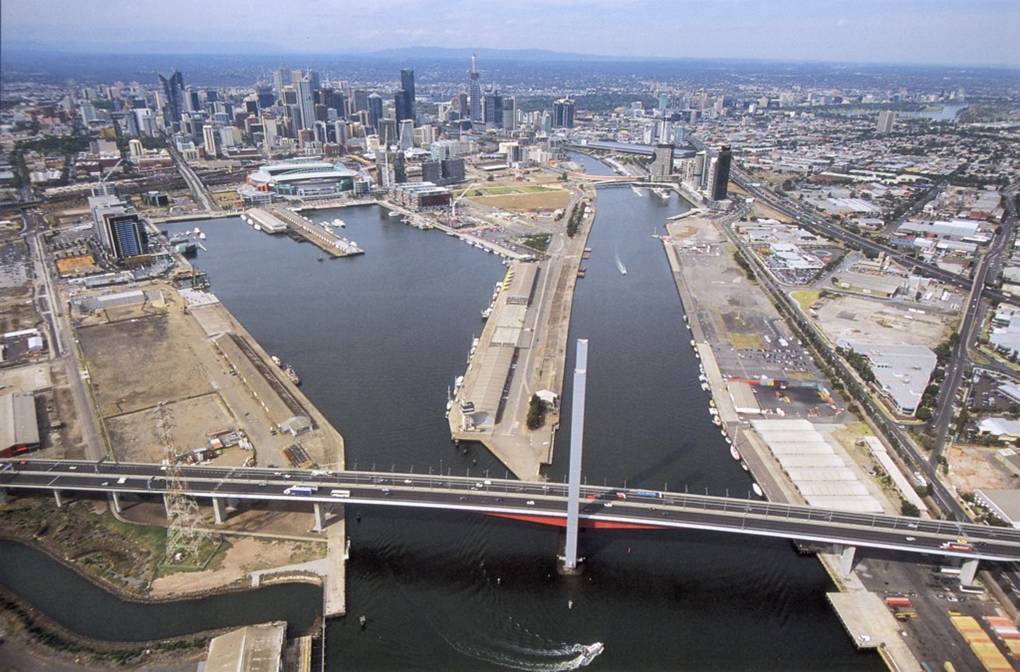
Urban renewal of the wasteland of empty docklands in Sydney, Melbourne and Adelaide under a neo-liberal mode of governance has taken the form of shaping the city along lines favourable to developers, finance capital and and promoting the city as an optimal location for high-value businesses and a fantastic destination for tourists. What we have is a small political and economic elite who are in a position to shape cities more and more after their own desires. Melbourne's Docklands is a prime example of the city as a building site.
The result so far, in what is Australia's largest urban renewal project--- building the new urban world on the wreckage of the old---is a half-finished development that has resulted in a windy and sterile urbanscape with very limited public green space for people to gather. It is a development that precludes lower-income and even middle-class people from access to accommodation anywhere near the water or the urban centre.
Referring to the recent phrase of capitalist renewal Harvey, in The Right to the City, observes:
As in all the preceding phases, this most recent radical expansion of the urban process has brought with it incredible transformations of lifestyle. Quality of urban life has become a commodity, as has the city itself, in a world where consumerism, tourism, cultural and knowledge-based industries have become major aspects of the urban political economy. The postmodernist penchant for encouraging the formation of market niches—in both consumer habits and cultural forms—surrounds the contemporary urban experience with an aura of freedom of choice, provided you have the money. Shopping malls, multiplexes and box stores proliferate, as do fast-food and artisanal market-places. We now have, as urban sociologist Sharon Zukin puts it, ‘pacification by cappuccino’.
Since the 1980s the property market has directly absorbed a great deal of surplus capital through the construction of city-centre and suburban homes and office spaces, while the rapid inflation of housing asset prices—backed by a extensive wave of mortgage refinancing at historically low rates of interest—boosted the domestic market for consumer goods and services.
|




Like any outer suburban dormitory suburb Docklands is dead after 5pm. It's dangerous because of its proximity to the western suburbs.