|
August 22, 2010
It may not happen, but it will be good if it does. A hung parliament, which means that neither major party deserves to govern, coupled to strong independents determined to change things for the better, may mean improved political governance. A hung House of Representatives and minor parties holding balance of power in senate should ensure greater check on executive power.
Though tougher times are coming to Australia, a hung parliament with strong independents, in the context of market failure of the self-regulating financial system and subsequent global recession, could result in a reform of the Australian parliament and an improvement in the functioning of our liberal democracy. We may even get better policy outcomes.
What has been disclosed by the result of the 2010 election is that the political establishment has been put on notice. The politicians have been placed on trial because citizens, in giving neither political party a majority of seats, have forced the politicians of different persuasions to start to talk to each other in fresh ways about how to govern the country.
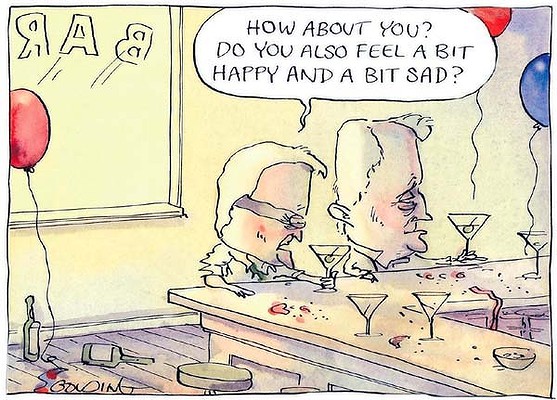
There is a general sense that the institutions of liberal democracy are antiquated, unrepresentative, and undemocratic. They are not working, and like Question Time, they have become an embarrassing farce that is celebrated as political theatre.
The game has changed, even if the rhetoric of the ALP, the Coalition and the mainstream media is about justifying the past, and they are still unwilling to look through the hung parliament window to what lies ahead.
No doubt we will hear talk of "stable and durable" government that will stand for the "national interest" and take the country in a "historic new direction" whilst the two major parties will continue to try to ensure the continuation of politics as usual. However, the election results indicate that we citizens no longer not trust either major party to form Government in their own right.
In a hung parliament situation the Independents have the power to start changing things. For instance, as Glenn Milne points out at The Drum:
The biggest problem for Abbott will be what to do about Labor's $43 billion National Broadband Network (NBN) rollout. Katter, Oakeshott and Windsor all want it and went out of their way on election night to point to the communications problems in their electorates. All three had to conduct phone interviews. There were no pictures available. In this case it was the absence of those pictures that was worth a thousand words.
Milne reminds us that Abbott is dependent on junking the $43 billion NBN plan to pay for his election promises:
The money is critical to any Coalition plan to bring the Budget back into surplus - a core economic election promise. But not only do Windsor, Katter and Oakeshott want regional broadband connectivity as part of any deal struck with the main parties, so too do the Greens' Adam Bandt and independent Andrew Wilkie in Tasmania, where the broadband rollout has already begun.
The political authority of the major parties has been undermined and both Abbott and Gillard know it.
Do they also know that citizens have delivered a hung parliament because they have ignored sections of the the electorate---the only way to interpret the Andrew Wilkie result in Dennison. Wilkie says that he is beholden to nothing else but the public interest in supporting stable, competent, ethical government; he's made a dig at Labor for taking Denison for granted for 23 years with a neglect of infrastructure; particularly roads; he's after a better deal for Hobart; says that many government pensions and payments had fallen behind the cost of living; and also mentioned issues of mental health, dental care funding and just funding for all schools.
|





The SA experience with Independents in a Rann Government is that coalition government is stable government. The media's scenario of coalition equals unstable government is off beam.