|
October 06, 2003
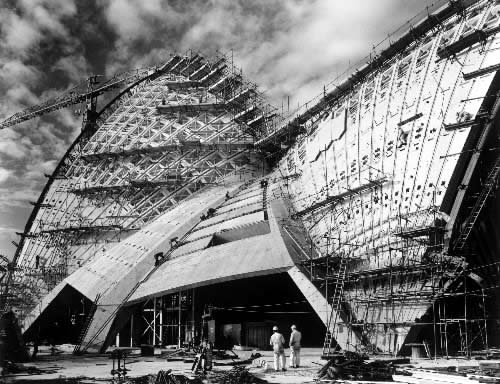
Max Dupain, Sydney Opera House, circa 1973
Article
More Photos
The images swing from celebrating the heroic, the formal and the iconic. Dupain is trying to express the meanings of iconic symbol of Australian modernity from within modernism.
1973 was a time of the resurgence of Australian nationalism. Australia had come of age in a cultural sense. Hence the two signs of modernity:

Max Dupain, Opera House and Harbour Bridge, circa 1973.
Sydney was modern. The rest of the country lived--languished---in the stulifying conventions of the nineteenth century.
What we do not have here with these works by Dupain is a critical artistic practice performed within and upon the institution of art itself. It is naive modernism; a modernism that was unaware that it was just another art style and aesthetic based on formal beauty, presence, subjectivity and aura.
1973 was before the pop artists and postmodernists appropriated the imagery of the mass media and advertising to decode its conventions and those of the art institution.
Yet the organic form of the Sydney Opera House can be seen as the repudiation of the conventions of modernist architecture.
|


