|
July 31, 2004
This is a well-known Australian modernist image. Iconic almost.
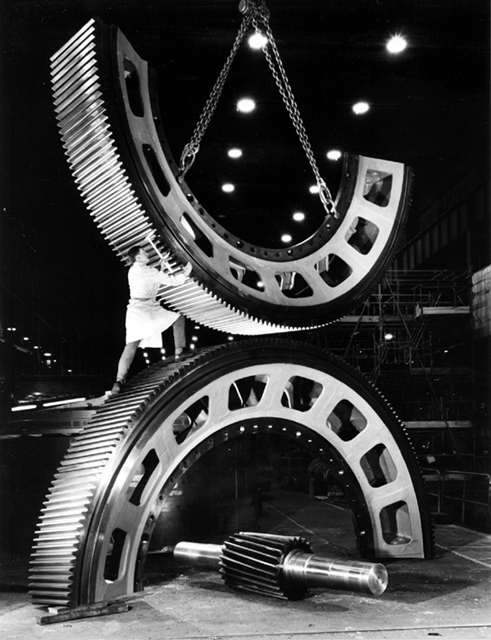
Wolfgang Sievers
It has become a modernist art image even though its origins are in industrial and commerical photography. It was conscripted by the modernist art institution to help construct a modernist canon and a modern aesthetic.
That aesthetic was understood in very simplistic terms: as a shift from representation (the mirroring of naturalism) to abstraction based on certain stylistic characteristics such as the close-up, the bird's-eye and other asymmetrical and unnatural camera perspectives.
It was simplistic in another way. The modernist aesthetic was understood as the new. The new was modern industrial society as opposed to the old pastorial Australia in the nineteenth century. The modernist images were assumed to reflect the modern world.
|


