|
October 09, 2005
Fifty years ago, Australian cities were primarily a family dominated structure (two parent and two kids etc) living in suburban detached houses, with the (pure) garden suburbs connected to the (dirty) inner city by public transport.
It is a tired cliche because the demographics and urban mode of life in Australia have changed dramatically since then:

In an op ed in the Sydney Morning Herald Chris Johnson addresses the changes to the urban mode of life
In metropolitan planning, two simple extremes ripple around the opinion pages - suburban detached houses and urban high-rise towers. Australian society cannot be neatly sandwiched into these two models. The growth of Sydney's population in the coming 25 years or so must be accommodated somewhere and the two opposing concepts need to be reconciled.
The high rise apartment towers give us a particular kind of city:
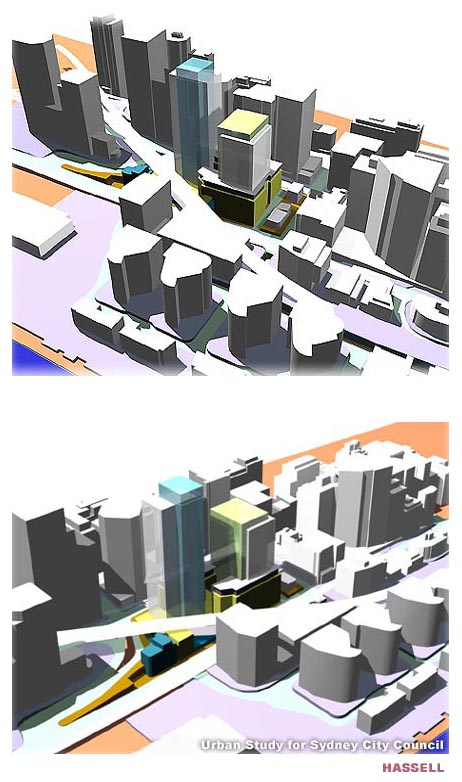
Hassell Architects, Housing project, Sydney
There is a need for a more diverse mix of housing stock because of the changing nature of households. As Johnson says:
In a recent survey for the Property Council of Australia, Bernard Salt predicted that by 2031 only one in four households will comprise a mother, father and children - down from the one household in two during the 1950s. Planning must respond to needs for housing to accommodate single people, single parents with children, childless couples, elderly couples and elderly singles.
Most of our politicians continue to talk about Australia in terms of the renovated 1950s suburban model. They are looking backwards into the future.
|


