|
November 13, 2005
There is a discordance between art and truth that goes back to Plato's explusion of the poets from the polis in The Republic.
The expulsion of an autonomous post-Christian art constitutes modernity. Here art is taken to be outside truth and reason in the discourse of aesthetics, and so it conventionally becomes only art, mere art and a matter of taste. Tis the consequence of positivism many say
The effect is the alienation of art. Tis science that speaks of truth whilst it is religion that speaks of morality. Art is personal taste--what I like. These are the signs of modernity.
What if art speaks in its own voice in post modernity?
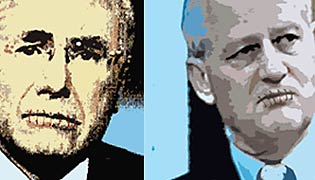
Michael Agzarian, digital image, 2005.
An exhibition of Digital portraits by Michael Agzarian at the Wagga Wagga Art Gallery show the Prime Minister (John Howard) and senior ministers (Attorney General, Philip Ruddock and Immigration Minister, Amanda Vanstone) with their lips sewn together.
Link via Barista, Daily Flute and Road To Surfdom
If art speaks in its own voice, then it does not speak truthfully or rationally. Something has gone wrong, for art does speak truthfully and it does speak about a better life than the one lived now. Maybe the discordance between art and truth (and goodness) is miscontrued in aesthetics? Maybe the conception of art outside truth and morality in aesthetic discourse is in need of a critique? A critique that understands art as historical--ie what it has been and will become.
What kind of history is that? Would it give rise to an aesthetic critique of modernity? One of remembrance, mourning and grief?
|


