|
November 26, 2005
I've always been a fan of the Velvet Underground. I've seen their music of 1967-70 as the representing the first real break from mainstream rock; music that is now seen as classic rock. I guess I have seen them as representing a paradigm shift in rock music signalled by the 1968 White Light/White Heat.
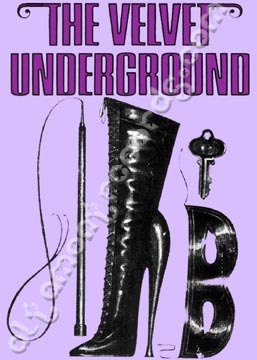 But then, I enjoyed the pop sensibility of the earlier The Velvet Underground and Nico with its pop art banana cover designed by Andy Warhol and its roots in Warhol's multimedia happenings--the Exploding. Plastic. Inevitable. This is where nihilism and degradation meet pop music. But then, I enjoyed the pop sensibility of the earlier The Velvet Underground and Nico with its pop art banana cover designed by Andy Warhol and its roots in Warhol's multimedia happenings--the Exploding. Plastic. Inevitable. This is where nihilism and degradation meet pop music.
With these multimedia happenings Warhol used his celebrity and resources to sponsor and promote artists and collect them into a single, creative troupe, shielding them from the commercial film and music industry, thereby allowing them to create raw art free from commercial constraints.
I also enjoyed the return to pop sensibility in the 1969 third album, The Velvet Underground where Doug Yule, had replaced the experimental, avant-garde, dissonant John Cale.
I do not know Loaded or the 'lost album'- subsequently entilted VU. From all acoounts they mark the shift away from the experimental to pop/rock just like the Grateful Dead shift to Americana with their Workingman's Dead.
As Piero Scaruffi says the 'Velvets are the great poets of the metropolis. Their poetry is a continuous reference to the degradation of modern life, to the alienation of the city, to the existential desperation of chronic loneliness, to the moral and physical violence shared by an entire population of modern "losers." '
The conventional rock history runs like this:
While the American west coast was undergoing the Summer of Love, psychedelia and flower power, the typically east coast Velvets concerned themselves with darker subject matter: transvestites, heroin addiction, and sadomasochism. Also setting them apart from their contemporaries was their use of feedback and amplifier noise in a musical context, exemplified by the seventeen minute track "Sister Ray" from their second album.
This is revisionism. The maniacal Sister Ray was significant --it represented the wild anarchic dark side of rock, which was further explored by the Grateful Dead in Live Dead and
My approach sounds like a portrait of a rock snob doesn't it? You know the genre professors of pop, making their appeal to the eggheads.
Then again, punk was a paradigm shift in rock music; one that was initiated by the Velvet Underground Is this the reason they are seen by rock historians as 'probably the 'most influential band of the entire history of rock music, and certainly the most influential on the 1990s.' Punk is the defining moment in popular culture?
|


Yes it does sound like a portrait of a rock snob, but that's why we read guys like Lester Bangs and especially Michael Bracewell--they legitimate music as an incubator for cultural movement (and maybe even moreso than visual mediums). I heard the song "Heroin" played at my favorite honolulu pool hall two nights ago and realized that many of the postrock bands like Mogwai, Couch, Mono, Godspeed You Black Emperor!, or Sigor Ros (all of whom seem to represent a break in conventional song structure, form, and content) could trace their beginnings to that song (with its layering and building). I wonder if their's a better music to paint to.