|
June 04, 2006
I've just stumbled across MercatorNet a liberal humanist culture magazine. I found this article entitled PoMo's unteachable suspicion by Philip Elias. 'Unteachable suspicion'--it's quite catchy.
 It is an account of a seminar in which academics from three Australian universities took the chance of a forum to lamblast the postmodern position. But why lamblast rather than engage? It is an account of a seminar in which academics from three Australian universities took the chance of a forum to lamblast the postmodern position. But why lamblast rather than engage?
The usual charges are relativism and nihilism.
Is this forum any different from the standard charges?
If not, are the standard charges argued for?
One of the papers is Your pocket guide to PoMo's history by Martin Fitzgerald. It's a mish mash of the history of modern philosophy that leads to postmodernism. If it's a historical sketch then how does that history inform postmodernism as a philosophy?
What then is postmodernism?
Fitzgerald says:
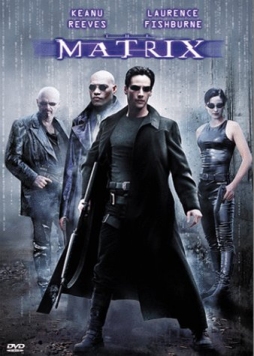
Postmodernism is a set of ideas to be studied at university. But it is also an attitude to life. People not only think postmodern thoughts, they also live postmodern lives. They live without ideals, or ideas; their morality is homemade relativism; their commitments are fleeting; they distrust authority and "canonical" texts; they are sceptical about assertions of truth and falsehood. Films are a useful way of capturing this. The Truman Show and Bladerunner are two thought-provoking examples, but there is one which sums them all up, The Matrix. See that and you'll understand more or less what postmoderism is all about.
I've seen The Matrix but I'm none the wiser. I've also seen The Truman Show and Bladerunner. I'm still none the wiser apart from it being something to do with appearances/reality with appearances as illusions and about power. That hardly engages with Nietzsche's overturning of Platonism does it.
The assertion that postmodernists 'live without ideals, or ideas' is close to nonsense. How can you live without ideas in everyday life? Presumbly that means postmodernists are empty headed. Does that mean postmodernists do not argue, but only justify themselves in terms of primitive moral responses, resentment and indignation?
And the assertion that postmodernists 'morality is homemade relativism; their commitments are fleeting' does make much sense of Nietzsche's revaluation of values and his criteria of commiting to those values that affirm life as a way of overcoming nihilism. Given Nietzsche's criticism of Christianity as the negation of life that makes us miserable, you would expect some philosophical response to his 'God is dead' argument wouldn't you.
W\hy not distrust authority? There may be good reason to do so. The appeal to authority indicates the cultural conservatism.
|


Gary, I had a quick browse through Mercator. It is obviously another one of the various right wing propaganda outlets trying to "renew"/"restore" traditional western "values". A bit like A New America and Renew America in the USA.