|
September 29, 2006
In his landmark exhibition The Photographer's Eye (MoMA, 1962), John Szarkowski argued that snapshot photography and other vernacular genres form an integral part of the history of the medium and its aesthetic possibilities. But what constitutes a snapshot? It was different from glossy surface of fine art photography.Fine art photographers defined their project against the professional mode of journalism and resisted the narrative legibility and compositional resolution of journalistic work
Was the ubiquitious genre of "unstudied" and "spontaneous" imagery really as straightforward as it seems? Szarkowski's answer was primarily in terms of photographic formalism and the self-referential art object.
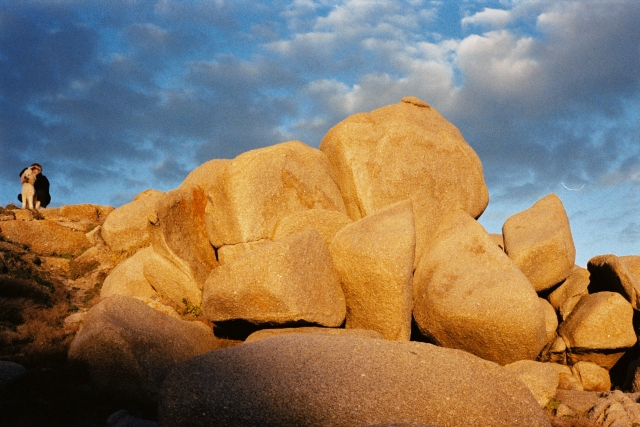
Gary Sauer-Thompson, Port Elliot: figures, Coorong series
Szarkowski then generated a transliteration of Greenberg's formalist aesthetics into photographic terms. He embraced the notion of medium specificity but rejected Greenberg's emphasis on the indexical essence (transparency) of photography. Szarkowski legitimated a form of photographic modernism, complete with autonomous artworks, inspired authors, and a configuration of shapes in space.
Can a snapshot photographer be a lyric poet of the everyday?
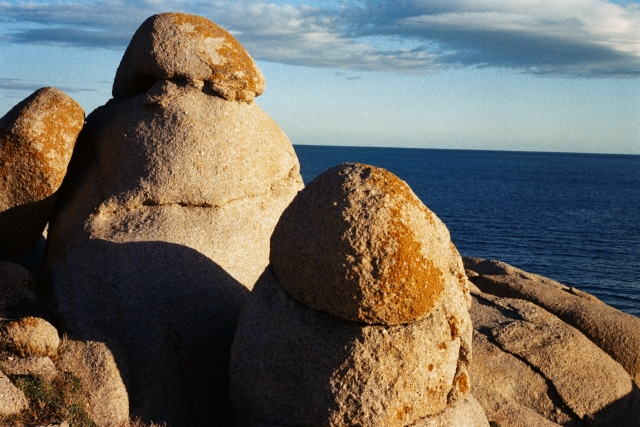
Gary Sauer-Thompson, Port Elliot: rocks Coorong series, 2005
Clement Greenberg's view was that photography's transparent relationship to the world undermines any attempts on the part of photographers to make autonomous works of art. A photograph that respects the obligations of its own medium would be anecdotal and literary. So Greenberg exiles realism from painting yet requires it in photography.
For many artists in the 1960s photography was only useful or interesting to them insofar as it was instrumental in conveying or recording their ideas. Time and again artists describe the photographs themselves as either brute information or uninflected documentation. For many years curators, critics and historians have corroborated this reductive understanding of the role of photography, because it provides a way to free artists from painterly signifiers.
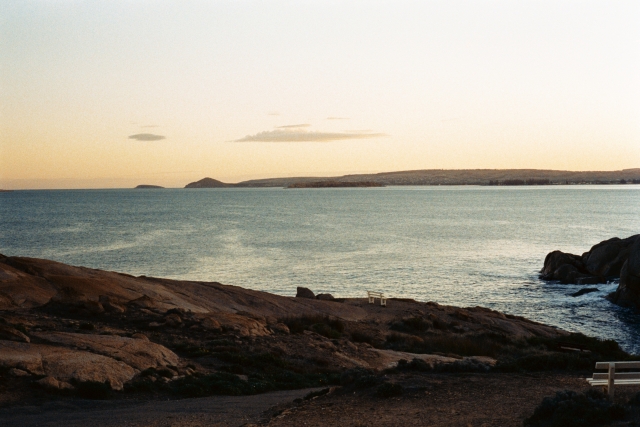
Gary Sauer-Thompson, Port Elliot: twilight, Coorong 2005
What of photographers? Presumably snapshot photography lacks the aesthetic sensibility and technical expertise necessary to qualify as art, unless one embraces modernism. Can one engage the vernacular tradition of photography and establish a dialogue with both the function and aesthetics of the snapshot?
|


