Thought-Factory.net Philosophical Conversations Public Opinion philosophy.com Junk for code

Mandy Martin, Puritjarra 2, 2005. For further information on MANDY MARTIN, refer here: http://www.mandy-martin.com/
If there are diverse kinds of knowledge and ways of knowing place, then we need to learn to value the different ways each of us sees a single place that is significant, but differently so, for each perspective.
RECENT ENTRIES
SEARCH
ARCHIVES
Library
Thinkers/Critics/etc
WEBLOGS
Australian Weblogs
Critical commentary
Visual blogs
CULTURE
ART
PHOTOGRAPHY
DESIGN/STREET ART
ARCHITECTURE/CITY
Film
MUSIC
Sexuality
FOOD & WiNE
Other
www.thought-factory.net
looking for something firm in a world of chaotic flux

downsizing the creator « Previous | |Next »
January 11, 2007

I've always been an advocate of the poststructuralist thesis of the 'death of the author' as it downplays the individualism of the heroic/genius artist that is so pronounced in modernism and abstract expressionism.

On Roland Barthes' account in the "Death of the Author" (1967) the argument is against incorporating the intentions and biographical context of an author in an interpretation of text. Writing and creator are disconnected in order to undermine the traditional view, which holds the experiences and biases of the author serve as the basis for definitive interpretation of the text. For Barthes, to give a text an Author and assign a single, corresponding interpretation to it is to impose a limit on that text.
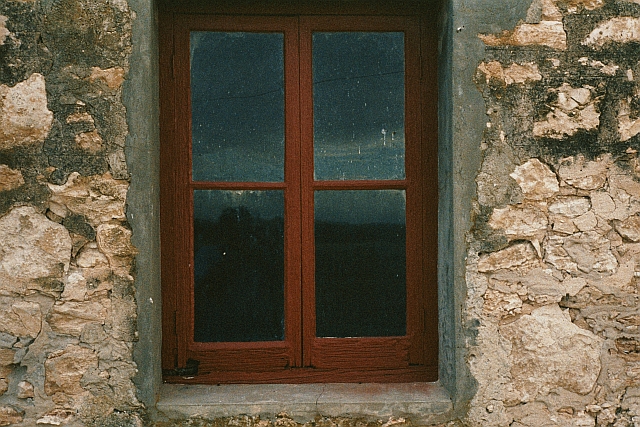
sheddoor.jpg
Gary Sauer-Thompson, self-portrait, 2004

Each piece of writing or image making writing contains multiple layers and meanings, especially when the text or image is contextualized and seen as part of a system of language. The emphasis shifts to focus upon the disjointed nature of texts or images, their fissures of meaning and their incongruities, interruptions, and breaks.
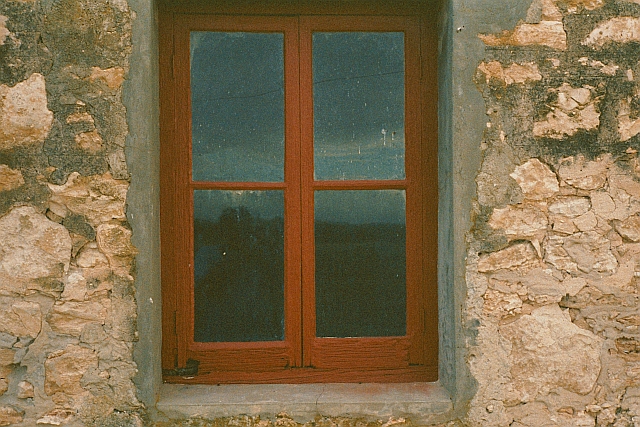
sheddoor1.jpg
Gary Sauer-Thompson, self-portrait, 2004

So the creator of the photo becomes part of the blur of the shadow/darkness. It signifies a shift from an anthropological standpoint based on a priori concepts of the nature of the human subject to focus on the role of discursive practices in constituting subjectivity.


| Posted by Gary Sauer-Thompson at 06:45 PM | | Comments (10)
Comments

Comments

Gary

The art world is an incestuous little cult with its own coded language and dense, inpenetrable theories that make critics, curators and artists themselves, feel superior to "normal" people and "outsiders." In the end, the only thing actually produced, is a firewall between the art object and the viewer and that very obstruction, not the work itself, attempts to pass for profundidty.

"The death of the author" is just another amusing theory in an academic art world lousy with theory and pathetically bereft of substance.

Really outstanding and compelling work is largely the result of exceptional people. What purpose does it serve to ignore or diminish the experience of the person who originates the piece? Why elevate the DISCUSSION of a work of art to a position of more importance than the artist or the art, itself?

What you're trading here , it seems, is "the experience and biases of the author" for the experience and biases of the THEORIST.

Rocco Sole

Rocco,
I am not persuaded that I am trading "the experience and biases of the author" for the experience and biases of the THEORIST as you state.

The post, which included theory & a photo, was produced by myself. So we have both the theoriest and the photographer. Why cannot there be an interplay between both art and theory instead of one of the other? Doesn't the art versus theory duality need to be questioned, rather than being endlessly affirmed?

Interpreting my photo in this post does not require that you need to know my intentions. Hell, I cannot even remember them it is so long ago. All I remember was that it was summertime, we were down Aldinga way visiting friends, and I needed to take photos in the shade because it was very bright and contrasty. So I walked around some old sheds in the backyard. Doesn't help much does it, in terms of interpreting the image?

Gary,

I'm fully aware that "the post was theory & a photo produced by" yourself. Which, to my way of thinking, is a refutation of your hypothesis. All regular readers of Junk For Code know a lot about you already. It's virtually impossible to spontaneously manifest amnesia when we're asked to view your picture.

"Why cannot there be an interplay between both art and theory instead of one of the other? Doesn't art versus theory duality need to be questioned rather than being endlessly affirmed?"

There's precious little questioning. Why? Because theory is dominant and art is subordinate. THAT is the reality in today's academic art world. Letting words, pictures or music speak for themselves is considered, by the self-appointed secular priests of academe, hopelessly and ridiculously Paleolithic.

Look, I'm not opposed to the reasonable DISCUSSION of a work of art. But what is accomplished by subordinating the work to some predefined, inflexible flight of pseudo-intellectual fancy--by reducing it to an excuse for a highly speculative polemical exercise?

Why diminish the personality of the artist while exalting the function of the theorist? Whether it's Rothko, Cartier-Bresson, Warhol, Mapplethorpe, Joseph Cornell, Duchamp or Weston, doesn't knowing something about their intriguing and eccentric lives illuminate and inform our reaction to their work?

And what about all the exquisite Aboriginal work you've been posting of late? Are we supposed to forget their heritage and the unique cultural experiences they bring to their work? Are we supposed to, as you put it, "downsize the creator?"

But I'll shut up now. I've already yammered on far beyond the limit.

In the end, I'm a subscriber to artist / humorist, Martin Mull's, wise observation:

"Writing about art is like dancing about architecture."

Rocco Sole


Rocco,
you write:

There's precious little questioning. Why? Because theory is dominant and art is subordinate. THAT is the reality in today's academic art world. Letting words, pictures or music speak for themselves is considered, by the self-appointed secular priests of academe, hopelessly and ridiculously Paleolithic.

I accept your claim that theory has been dominant in the art institution. And I'll accept your claim that it still is.

Doesn't junk for code often challenge theory's dominance by posting images on their own, with little or minimal comment?

But images do not just speak for themselves. We, the audience, interpret them as we look at them and then 'read' them. I offered an interpretation of the photo, which had very little to do with my intention when I took the image. 'Downplaying the photographer' is a reasonable interpretation of the image, and to that extent, it suggests that there can be diverse interpretations of an image.

You add:

Whether it's Rothko, Cartier-Bresson, Warhol, Mapplethorpe, Joseph Cornell, Duchamp or Weston, doesn't knowing something about their intriguing and eccentric lives illuminate and inform our reaction to their work?

I totally agree. We do need context and biography and this does inform our responses to the image. I would go further and say that an informed response is usually better than an uninformed one.

However, that doesn't undercut the argument that contests the aesthetic view that the creator's intention re the image should be the dominant or the only interpretation. In the reaction against theory's hegemony, we not need to return to 'the author's intention is all' position of some traditional aesthetics.

In the end, all I'm arguing for is a diversity of interpretation of images.

Gary,

Arguing for a diversity of interpretation of images is admirable, Gary. I have no quarrel with it. What concerns me is theory's unassailable stranglehold on the discourse--it's almost unquestionable supremacy.

As you may have noticed, most challenges to theory's dominance are dismissed by the intelligentsia as pitifully and woefully uninformed. What was once novel and revolutionary has now become just another sacrosanct orthodoxy.

After teaching in a university here in the States and for one winter session at a university in Oz, I've had my fill of of students who manipulate theory to distract the viewer from the vacuous mediocrity of their work. And I'm weary of entering galleries only to be bludgeoned by paragraph after tedious paragraph of absurd, convoluted, "artist's statements" that, instead of illuminating the work, only serve to sidetrack us from noticing there isn't very much VISUALLY going on.

Like the fable of "The Emperor's New Clothes," I'm being asked to see something that really isn't there, to trade my skepticism and critical judgement for the warm glow of an unquestioning group experience, to enter that comfortably reassuring zone where everyone thinks the same wonderful thoughts, where each of us nods politely in agreement while congratulating each other on our unerring wisdom and impeccable taste, where consensus trumps common sense, where tribal acceptance takes precedence over intellectual freedom.

Theory is the new orthodoxy. And, because I really do agree with you about a "diversity of interpretation of images," I am strenuously opposed to any exclusionary convention that so arrogantly dominates the academic landscape. In its wake, like McDonald's or Wal-Mart, theory eradicates or suffocates everything that's independent.

I will leave you with this and welcome your response. The brilliant Italian architect, photographer, designer and writer, Carlo Mollino once opined:

"The best explanation of one's work is its silent exhibition."

Rocco Sole

Rocco,
I agree about the artist statements re your comment:

And I'm weary of entering galleries only to be bludgeoned by paragraph after tedious paragraph of absurd, convoluted, "artist's statements" that, instead of illuminating the work, only serve to sidetrack us from noticing there isn't very much VISUALLY going on.

So we agree on two things---the diversity of interpretation and the pseudo aesthetics of artists.

I would argue that there is a place for aesthetics--a critical reflection on art that recognizes art's autonomy. Visual art is both nondiscursive, is socially significant, and has historical categories and norms that may have become irrelevant and outmoded.

Gary,

I'm interested in the "historical categories and norms that may have become irrelevant and outmoded." If you have time, could you expand on that a bit?

Rocco Sole

Rocco,
in the process of historicizing aesthetic concepts we could question/test the relevance of the concept of genius, could we not? Or the picturesque? Or the category of taste?

On the other hand, many of the older categories--beauty, expression , meaning--- need to be reworked to give them new content. I have indicated how this can be done with meaning --the shift away from the intention of the creator/producer to the system of images in which are embedded in our daily lives.

This is world of philosophical aesthetics as such a way of working would require that we (1) give evidence of the historical character of aesthetic categories, (2) reconstruct the philosophical debates and (3) confront the traditional categories with the current socio-historical situation.

I think that many of the manifestos and artist statements etc that you find so irritating are an attempt to do (3).They don't do it very well cos they are trained in aesthetics ----but they do raise the issues.

I interpret 'Theory', which everyone goes on about, as an attempt to do philosophical aesthetics; one that is done with little consideration or "knowledge of the aesthetic tradition.

Gary,

The 20th century was the bloodiest and cruelest in human history. Despite what the egocentric American bedwetters say, it wasn't 9/11 that changed everything, it was Auschwitz and Buchenwald and The Rape of Nanking, Dresden, Hiroshima and Nagasaki, Stalin's purges, Pol Pot's madness, Chernobyl and Bhopal --THAT stuff changed everything.

And perhaps that's where theory and the new explanations and justifications for art come from--an attempt to see the aesthetic impulse within the context of cataclysmic change, perpetual war and widespread, unspeakable barbarism.

I'm not certain the death of the creator, semiotics, deconstructivism, postmodernism, the redefinition of taste and the picturesque will adequately address any of these issues. And I'm not certain that I care. When I look at Joseph Cornell, Hopper, Sally Mann, Ray K. Metzker, Sargent, Duchamp, or any other artist that I find really captivating, those considerations are very far away, indeed. Instead, I find myself having some sort of intensely moving experience that is altogether impossible for me to put into words--an episode that is, thankfully, very far away from the combative and speculative disputes of academe. To my mind, that moment is where the experiential payoff lies--with that unexpected suckerpunch that shakes you up a bit and asks you to intuitively (and not theoretically) reaffirm something you already knew or examine something you never considered.

Thanks for the exchange, Gary. I always find it stimulating.

Even when I disagree with junk for code I always read it eagerly.

Best,

Rocco

Rocco,
The irrelevance of the 'picturesque' to 20th century modernist art is why this old category needs to be placed to one side by asethetics.

Deleuze is your guy as he basis his aesthetics on the nonrational logic of sensation and highlights the intensity of sensation; or the a violence associated with “colour and line, a static or potential violence, a violence of reaction and expression” .

 
Post a comment

(If you haven't left a comment here before, you may need to be approved by the site owner before your comment will appear. Until then, it won't appear on the entry. Thanks for waiting.)

Name:
Email Address:
URL:
Remember personal info?
Comments: (you may use HTML tags for style)