|
February 05, 2007
Most of my short time in Queenstown, Tasmania was spent looking around for the right sites to take photographs from. This is a snap of an disused open-cut mine just out of Queenstown. I had intended to go back with a larger camera the next day, but it rained that morning. By the time the rain had cleared the light I required for the image had gone. Then we had to leave Queenstown to begin the journey back to South Australia.
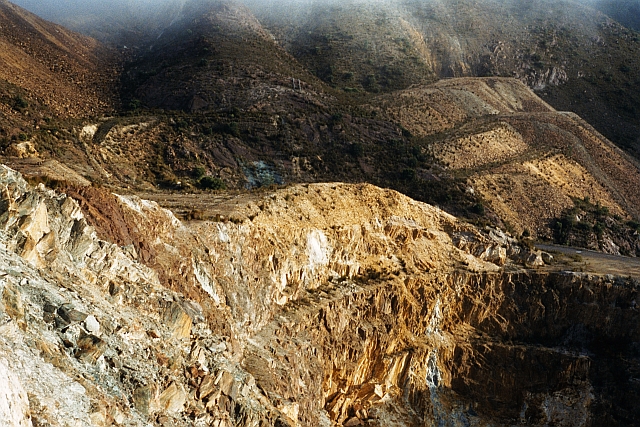
Gary Sauer-Thompson, Queenstown mine, 2006
So I was just left with a sketch, a snap that suggested possibilities. It constitutes the raw material to work from, and it s part of the process to produce the finished product as a photographic image that is an artwork. So we have a polarity between the photograph's character as an entity and its character as a process. The finished product remains incomplete and it's reception as an experienced object is based on a fragment of an art work.
How would I have completed work on the snap to produce the final image? I would included the water at the bottom of the open cut mine to show that it was a mine:
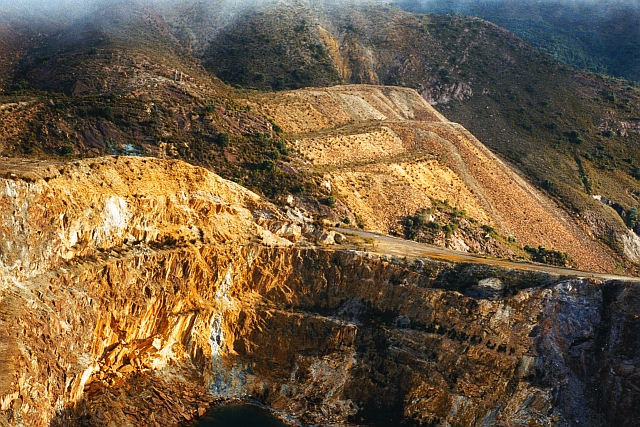
Gary Sauer-Thompson, Queenstown mine, 2006
This is where I would have started work from this image in the early morning light. I would have used the camera movements of the old Linhof 5x4 to square up the diagonals and make them more dynamic. I would also have included more of the water at the bottom of the mine to show why the cliff face was barren of vegetation. The final image would have disguised the work that went into its production and it would need to be reconstructed from the series of snaps.
So one can begin to discern a work's truth content by asking whether the photographers' intentions were actually achieved. Technical failure can signify questions about the intentions. But we also have a material unconscious that lets history crystalize in the artwork.
|


