Thought-Factory.net Philosophical Conversations Public Opinion philosophy.com Junk for code

Mandy Martin, Puritjarra 2, 2005. For further information on MANDY MARTIN, refer here: http://www.mandy-martin.com/
If there are diverse kinds of knowledge and ways of knowing place, then we need to learn to value the different ways each of us sees a single place that is significant, but differently so, for each perspective.
RECENT ENTRIES
SEARCH
ARCHIVES
Library
Thinkers/Critics/etc
WEBLOGS
Australian Weblogs
Critical commentary
Visual blogs
CULTURE
ART
PHOTOGRAPHY
DESIGN/STREET ART
ARCHITECTURE/CITY
Film
MUSIC
Sexuality
FOOD & WiNE
Other
www.thought-factory.net
looking for something firm in a world of chaotic flux

colonial topographical sketches « Previous | |Next »
March 14, 2007

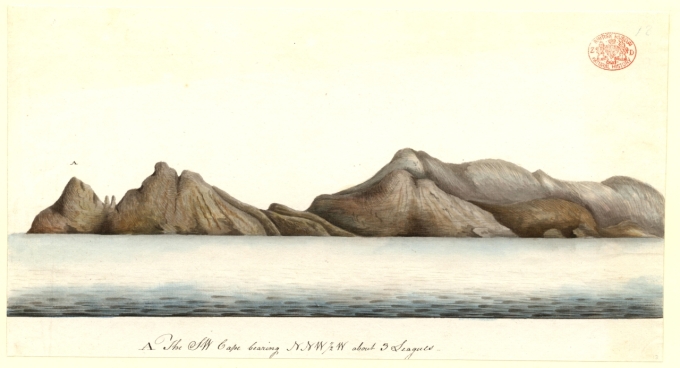
On 13 May 1787 eleven ships, now commonly referred to as The First Fleet, set sail from Portsmouth to establish a colony in New South Wales, Australia. They reached their destination on 18 January 1788. One of the unplanned but long-lasting outcomes of this event was the large number of outstanding drawings of aboriginal people, the environment and wildlife found on arrival as well as of the early foundation of the colony.

Some of these images are held by the Natural History Musem in London, including:
WatlingSWcape.jpg
John Hunter (attrib), The SW Cape bearing NNW 1/2 W about 3 Leagues, Tasmania, 1788

Since no professional artists had been assigned to the First Fleet, it fell mainly to the naval men, trained in the art of chart-making and the drawing of coastal profiles, to construct a visual record of their journey.

| Posted by Gary Sauer-Thompson at 08:52 AM | | Comments (0)
Comments
 
Post a comment

(If you haven't left a comment here before, you may need to be approved by the site owner before your comment will appear. Until then, it won't appear on the entry. Thanks for waiting.)

Name:
Email Address:
URL:
Remember personal info?
Comments: (you may use HTML tags for style)