|
April 06, 2007
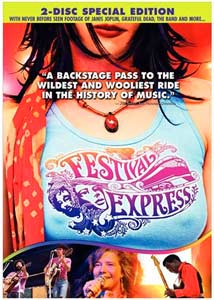
I watched a DVD of Festival Express last night. It is an account, or record, of a little-known moment in rock n' roll history in 1970, when groups including Janis Joplin, The Band, and the Grateful Dead, slept, rehearsed, jammed, and had a drunken, bacchanal time aboard a customized train that travelled from Toronto, to Calgary, to Winnipeg, with each stop culminating in a concert.
 If the trips between cities were a mix of jam sessions and partying, then the music of the drunken jam session was not of high quality. It may be a great time for the participating musicians breaking down the musical boundaries (especially Jerry Garcia) and experiencing the flow of the music on their magical mystery tour, but the drunken jams and musical melange are not that much fun to listen to. If the trips between cities were a mix of jam sessions and partying, then the music of the drunken jam session was not of high quality. It may be a great time for the participating musicians breaking down the musical boundaries (especially Jerry Garcia) and experiencing the flow of the music on their magical mystery tour, but the drunken jams and musical melange are not that much fun to listen to.
It's mostly a travelogue/concert film with a wistful, nostalgic reminiscing by the performers about the good old days---everything was better back in those days.The Grateful Dead had just released its seminal "Workingman's Dead;" The Band was coming off the double triumphs of "Music From Big Pink" and "The Band"; and Joplin had released the successful "Pearl." A faded, forgotten past now, but a highpoint in rock music's golden 1967-1976 period; a moment that celebrates its affinities with other forms of popular music, such as the blues and folk and country. Rock music looked strong and vital, not fragile and insipid.
What the film highlights is the difficulties of Ken Walker, the principal promoter, who put together a show of headliners, and lost a lot of money. In the spirit of the time, rebellious crowds in Toronto and elsewhere decided that the music should be free, and were hostile to commercialism and the police who were holding them back. Hence the violence--the spirit of Altamont--that highlights the contradiction of the counterculture. Consequently, the Festival Express was, like Woodstock, a financial disaster for its promoters even as it identified with Nietzsche's celebration of the radical autonomy of art.
Though the film shows that rock music did not change the world (the rock=rebellion equation) the music is raw and immediate. Even if, apart from Janis Joplin, the concert musical performances weren't that great, this music still has affective power, and hasn't been choked by money and commercial interests. We have Richard Manuel's anguished and haunting reading of Bob Dylan's "I Shall Be Released". Janis Joplin's ferocious rhythm-and mostly-blues renderings of "Tell Mama" and "Cry Baby", which were full of raw emotion, were the film's most powerful filmed performances.
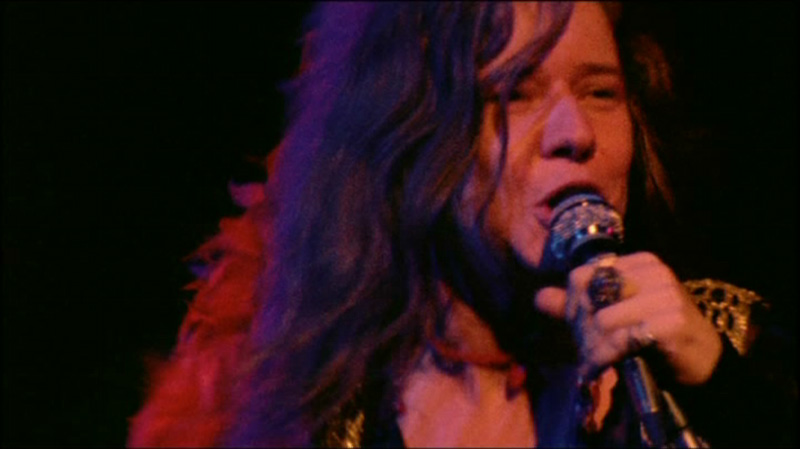
Less than three months later, Joplin was dead of a drug overdose. The Flying Burrito Brothers, without Gram Parsons, were solid and strong on "Lazy Day" and sounded nothing like the Eagles. Neither did the New Riders of the Purple Sage.
This music did not look or sound dead at the centre. The spectre of the 'death of rock' is still a rumour that is heard somewhere offstage. Amongst the fans on the counter-culture street? This music has not lost touch with its sources of power and energy.
Bob Smeaton constructed Festival Express from the 75 hours of raw footage. It has a retro feel----it looks how it would have made had it been made it in 1970--- and so utilizes a split screen familiar from the period documentaries about Woodstock and the Monterey Pop Festival. However, in this 'Woodstock on wheels' there is no reflection on the deaths of rock musicians caused by the overdose of drugs and alcohol. The Grateful Dead's 'Riding that train, high on cocaine' is apt. Nor is there any critical concern with the high modernist romanticism of the artist-as-rocker steadfastly refusing the Mephistophelean commercial temptation of late capitalism.
What is highlighted is that the formal concert gigs became to be seen to be more of a distraction from the "real" happening of the music utopia--or rock excess---on the train. This allows us to see in the music a genuine feel and a sense of vitality, which demolishes the boundaries between ostensibly discrete and distinct genres of popular music; an anarchic vitality that rock may never resurrect in today's manufactured pop landscape. The classical way of expressing this is to say that art refuses, and protests its unwillingness, to serve as simple entertainment.
|


on the subject of festivals...there might be a few good pics from this site as the weekend goes
http://bluesfest2007.bigblog.com.au/index.do