|
July 02, 2007
It's often presented as an either or isn't it.
The country has two choices with respect to the relationship between Aboriginal people and the Australian State. Indigenous public policy can be based on self-determination principles and rely on good governance arrangements or it can be continue to be assimilationist and suffer the consequences and burden that comes with dependency.
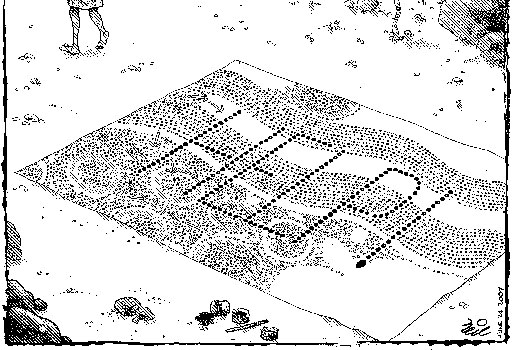
Leahy
There is a huge problem in the capacity of Aboriginal people emerging from a colonised relationship to take on the responsibility of asserting self-determination through self-governance structures. This emphasizes capacity building, partnerships and re-engineering programs at the local level.
However, the customary (kinship) is interpreted as ‘preserving a traditional hunter-gatherer economy inside a modern capitalist one’ and that such economies ‘are so prevalent because of the destructive separatist notions foisted on Aborigines [human beings without agency] by the chattering classes’. Communalism is equated with socialism by conservative neo-liberal commentators.
However, customary activity is contemporary and integrated with the modern capitalist economy. Aboriginal art, which is based on activities in the customary sector and on-country living, but which is marketed both in Australia and overseas and is underwritten by some state support. Arguably, this activity is contingent on state marketing support because of market failure linked to extreme remoteness, but it is often a community-controlled arts production.
|


