|
October 21, 2007
We caught the free tram yesterday morning and went shopping-- to buy new sheets and linen etc. It was hot--a warm north wind was blowing. We were part of a great mass of people spending their Saturday morning going shopping in Rundle Mall. I looked through the tram window with an innocent eye---as if I was visitor/tourist to the city---and saw a giant toad:
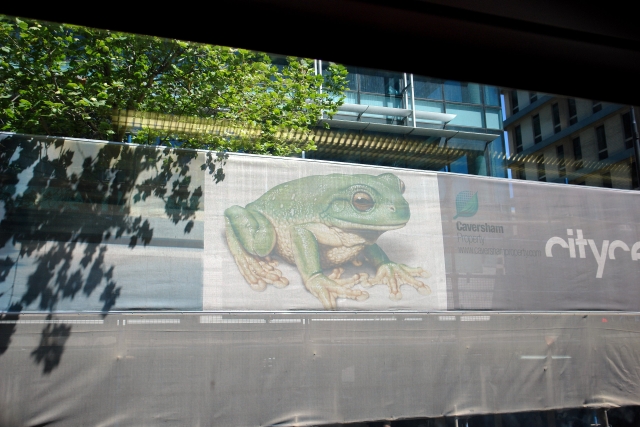
Gary Sauer-Thompson, toad, King William Street
What was that image about? A cane toad? Are the cane toad's marching to Adelaide? Or was it a frog signifying the effects of global warming? It was a new building site----Murdoch's old Advertiser building, in factr, which was being upgraded into what? Clearly, it was part of the big urban renewal of the CBD that signifies a prestige location of Sensational Adelaide.
The tram moved on and the surreal moment passed. Next stop was the shopping and entertainment precinct. We shoppers were full of eager anticipation to maximize our utility. Our credit cards were ready.
This kind of consumer imagery was everywhere in the David Jones arcade.
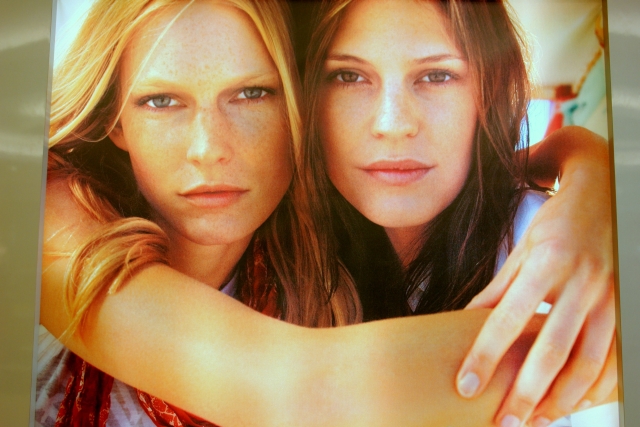
Gary Sauer-Thompson, Esprit poster, Adelaide, 2007
This was an environment that pulsated with ambiance shopping music.The overall effect was that I forget who I was before one entered the shopping environment. I was just a consumer in the moment surrounded by mysterious objects designed to catch my eye and entice me to max the credit card.You can tell who I really am by what I buy.
It wasn't long before I was tired of being a good consumer shopping off the aesthetics of beautiful/good living. I fled the consumption palace, and we walked home with our parcels. The free tram was no where to be seen and the tram stop was jamed packed with shoppers.
I had a late lunch then the dogs and I went looking for something different whilst on our afternoon walk:
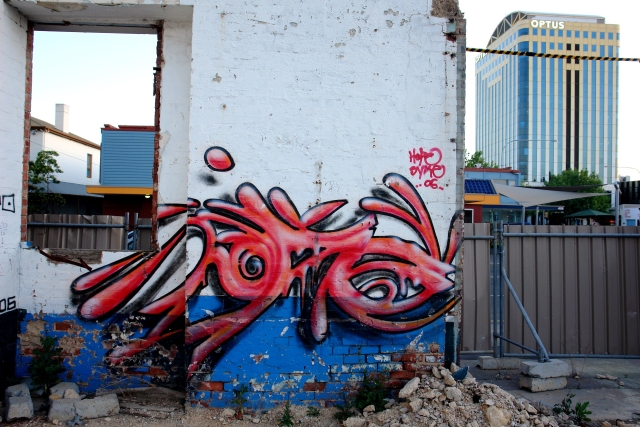
Gary Sauer-Thompson, graffiti, King William St, 2007
It is surreal street imagery in empty building sites that have signs that promise new buildings----"creative destruction" opportunities that never happen. The years come and go and the empty sites come to represent the the erasure of history, of culture, of memory. These empty spaces are the other to the world of "What did you buy?"; a space where you can to start ask "Is my life good?" and count on the answer to mean something more than buying consumer goods.
|


Gary,
were the shoppers spending their forthcoming tax cuts?