|
October 17, 2006
I had always understood the Sex Pistols in terms of being a threat to the social order and the monarch rather than the music. Though I haven't seen Malcom McLaren's 'The Great Rock 'n' Roll Swindle', I did not accept his mastermind thesis that the band were his living, breathing sculptures to build a punk aesthetic---all mean, subversive and anti-social --that was used to swindle the masses to make lots of money for the promoter through creating chaos. I presume that McLaren had delusions of being an Andy Warhol? I 've always understood punk as a genuine social movement struggling to create a truly participatory culture in in Thatcher's England.
But I never really listened to the music. So I watched a DVD of 'Never Mind the Bollocks, Here's the Sex Pistols' in the classic albums series on Sunday night. This 1977 album made by the Jones/Cook/Matlock/Rotten line-up of the English punk band, Sex Pistols. Sid Vicious comes across as a drug-addled and pretty vacant with questionable bass skills and a violent streak who contributed little to Never Mind the Bollocks. Yet he and his self-inflicted tragedy is the ghost that haunts the Pistols.
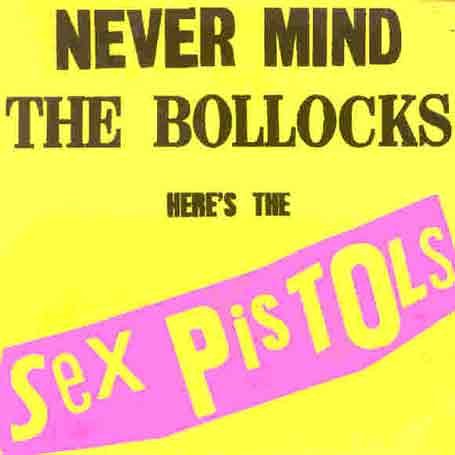
This was the only album they recorded (it's basically a singles collection), and it is now regarded as a classic and influential rock and roll album--- the defining album of punk. The album was an attack on the safe and bloated progressive rock (Yes, Emerson, Lake and Palmer, Pink Floyd?), the manufactured pop music of the mid-1970s and the prevailing fashion of long hair and flared jeans. It became a style that was commodified. Hence the DVD explores the album as signifying a critical moment in pop culture (a happening) as well as the unmaking of a band that mattered.
I was suprised how much the music on the album was overlaid ---it was not the raw, primitive sound that I thought it was. The lead guitar is minimalist and tight. if they could only play three chords they were serious about their music. The album sounds as fresh and hard as when it first came out in 1977.

Punk eventually became a fashion statement. Anarchy became less about overcoming political oppression of the working class in Thatcher's England, and more about wearing torn pants and leather jackets and obtaining free sex and drugs in a society of the spectacle.
The story on the classic album was hard to follow---I have yet to see the more personalised story of The Filth and the Fury film with the band themselves telling their own story.
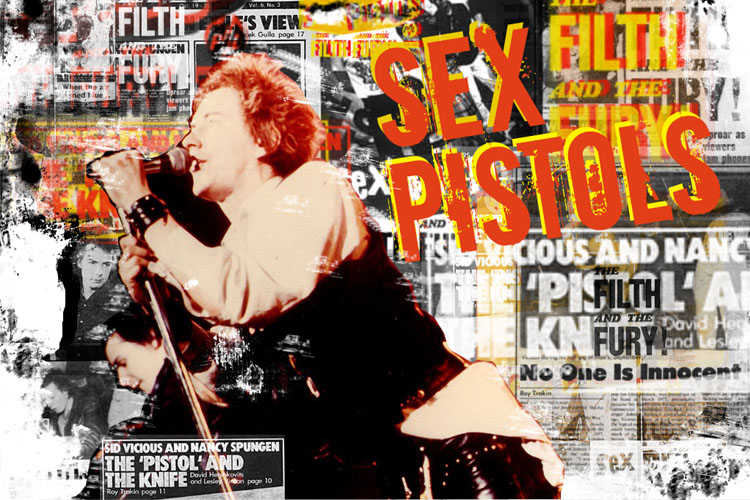
I guess we are still waiting for a film about punk as a movement instead of a rockumentary about a particular band. The Alex Cox film, Sid and Nancy, which released in 1986, is not that film.
|


I was a big fan of the pistols...hmm remembering back it all seemed legit anarchy to me at the time but they were wild times and I just guessed that those guys were out of it too...So poo poo to mclaren I say