|
January 15, 2007
Art speaks for itself some people say. There is no need for commentary, theory, critique, or aesthetics. We intuit or feel the effects of the image, and we are happy to respond to works of art in terms of the joys experienced by the wine or food appreciation of sophisticated consumers.
Of course, what is not acknowledge is that category that underpins the 'joys experienced by wine appreciation ' is the judgement of taste, and that this carries a subjective bias. Beauty, as it were, is in the eyes of the beholder, and this is deemed to be a foundational truth; so foundational that it is beyond critique. Why then has 'form' replaced the 'judgement of taste ' as the criteria to evaluate what constitutes a good work of art in the modernist art institution?
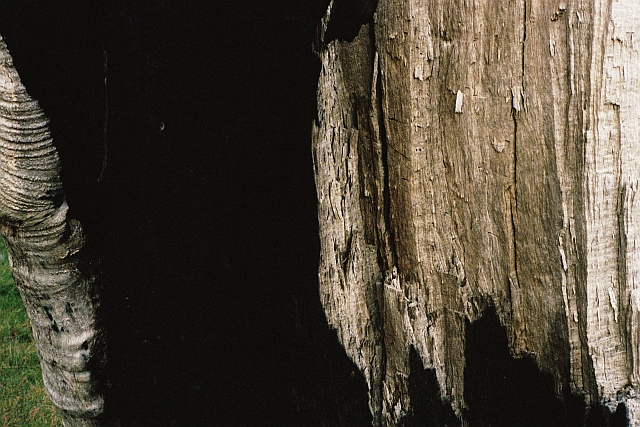
Gary Sauer-Thompson, tree trunk, Clare, 2005
What is often pointed to is a conflict between art and traditional aesthetics. There is a distrust of philosophical aesthetics, a hostility to 'Theory' that is deemed to be of an academic nature and a rejection of critical reflection on art works, institutions and aesthetic categories. Theory--the name for aesthetics in postmodernity--- is deemed to be alien--it is seen to hover over art works like some ferocious bird of prey.
Do we not have a particular kind of aesthetics tacitly presupposed in aethetic appreciation based on responding to, and experiencing works of art, in terms of the judgement of taste of sophisticated consumers? Isn't this a particular way to talk about works of art? An empiricist one, which presupposes that aesthetic judgments about beauty and harmony are perceptual and take their authority from a sense that is common to all who make them; and that this sense is called a ‘sense’ because it involves no intellectual element or category, no reflection on principles and causes.
Why should we tacitly accept or presuppose an empiricist aesthetics, as opposed to one that recognizes we use categories in making aesthetic judgements, whilst denouncing the relevance of aesthetics to contemporary art? Isn't this contradiction a reason for critical reflection? Doesn't art itself embody reflection?
|


