|
January 17, 2007
In Appendix 111 to Aesthetic Theory Adorno writes about the need for aesthetics. This issue surfaced in the comments on this earlier post. I 'd argued that there is a need to rework the old categories of traditional aesthetics. An example would be 'beauty':
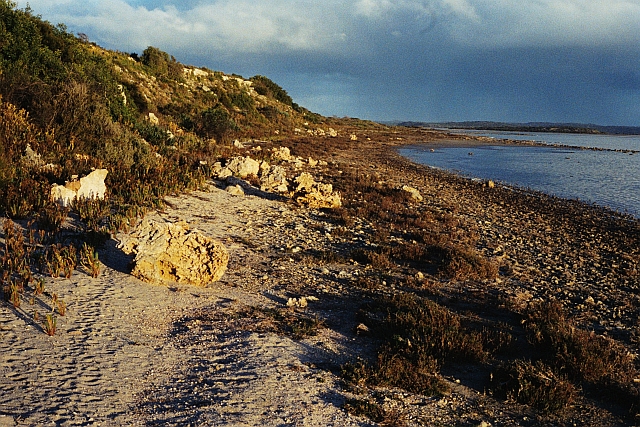
Gary Sauer-Thompson, Coorong, 2006
Many people in Australia still operate with a European understanding of natural beauty, and they do not see the bush or the Australian landscape as beautiful, by which they mean that it is messy, lacks colour and form and is all the same.
In Appendix 111 Adorno says:
In view of what has been said so far, aesthetics is not only obsolete but also timely and necessary. Art has no use for an aesthetics which prescribes norms so that art might feel less unsettled, more secure. What art does need is an aesthetics that is able to generate the kind of reflection that art is unable to marshall by itself. Terms like 'material', 'form', 'creation' are readily used by modern artists. Unfortunately they are mere cliches, and one of the functions aesthetics ought to perform is to disabuse artists of these hackneyed words. (p.468)
Adorno goes on to say that at a deeper level aesthetics has to be a reponse to the open endedness of works of art.
He states that since works of art:
are not timeless and self-same but in constant motion and development, they call for mental exercises such as commentary and critique. These are art's medium of becoming. Such shapes of spirit, however, remain weak and sickly unless they discover the truth content of art works. To accomplish this they must pass from commentary to aesthetics. Only philosophy can find that truth content and it is here that art and aesthetics converge. On its way to this point philosophy is engaged not in some external application of philosophical tenets, but in the immanent reflection of works of art. (p.468)
The situating of art in society involves mediating between the impliict truth content of art and the explicit truth claims of philosophy.
|


