|
February 18, 2007
A photo from the Fortitude: New Art from Queensland exhibition of the Queensland Art Gallery in 2000 mentioned in yesterdays post. It shows the established presence of photography in the mainstream of contemporary art. I'd more or less taken this for granted and so I was rather suprised to find so little photography on display at the National Gallery of Australia.

Carl Warner, Brown, 2000, Type C photograph
Warner often photographs industrial landscapes, although the latter work combines this approach to surfaces with images of nature. In many ways they don't read as photography at all. Warner's work is formal and painterly in its preoccupation with urban and natural surfaces.
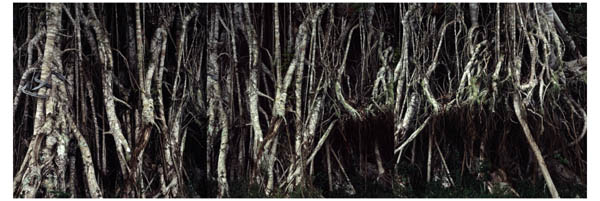
Carl Warner, banyon, from 'nature is' series, 2004, type c photograph
He has produced a substantial body of work over the last decade that works the surfaces of objects, framing a visual language out of the overlooked visual fragments, abstracting the details of industrial environments and transforming what is commonplace space into the formal artistic space of the art institution.
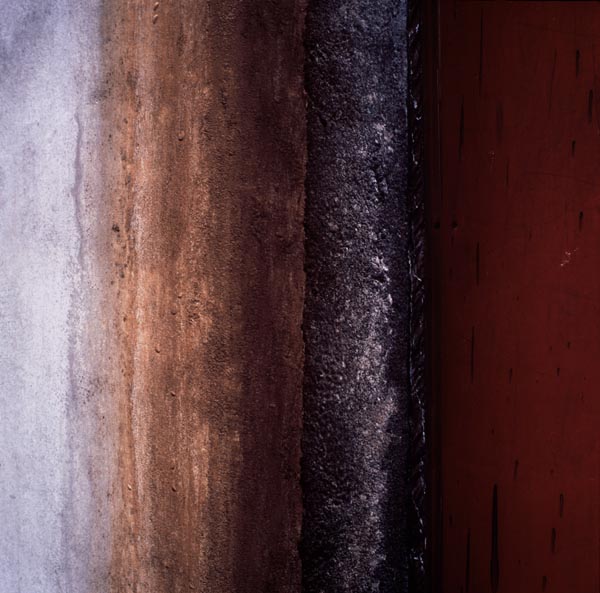
Carl Warner, The Surface 72, 2004, from the series The Surface, Lambda print
Though the photographs of the surface of things are done in straightforward way the aim is not documentary one , since the formal approach to the sign implies that photography has been liberated from its traditional referent to the real object. The reference is to both visual pleasure of the spectator and the aesthetic of minimalist painting.
|


