|
April 27, 2007
A snap that attempts to express the sublime as the power of a surging or raging ocean that evokes an archaic shudder, since our own preservation is at stake:
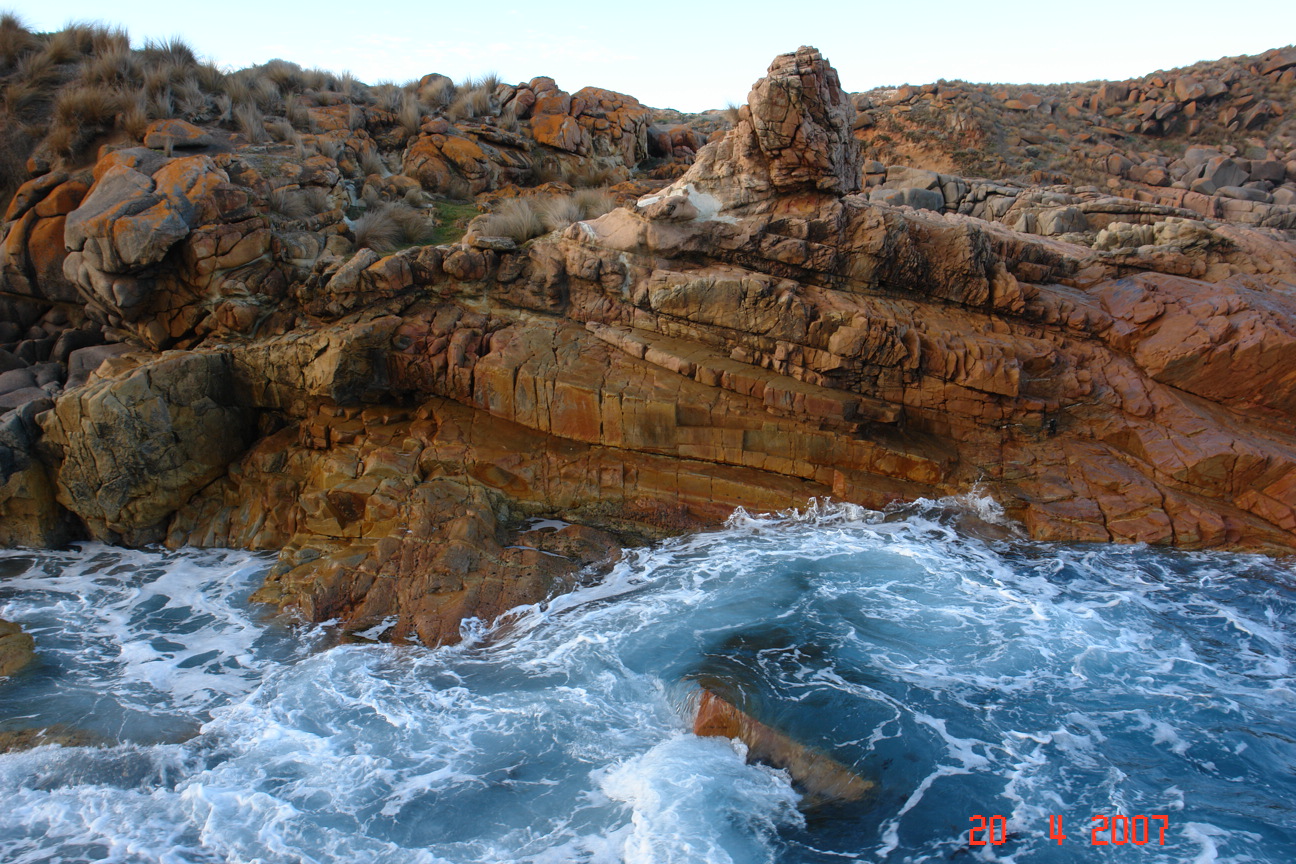
Gary Sauer-Thompson, Cape Willoughby, Kangaroo Island, 2007
The sublime halts the easy play of beauty that is so noticeable amongst wilderness photographers as it introduces a note of seriousness---fear. Shudder is the touch of what is other to modern subjectivity.
The natural sublime is not the same as the political sublime---ie., state terror, the gruesome torture of the Gulag or horror of the Holocaust. Nor is the natural sublime just a subjective experience or an imagined one (as held by the Lockean empiricists), since we are concerned with the quality of the object--a wild and rugged nature. Thus the waves of the surging sea can rise over the rocks the photographer is standing on and sweep her away in an instant. The situation --of taking the photo or merely looking is a dangerous one, as the threat from the extra large wave is always unexpected.
It this raging , threatening sea that induces the aesthetic judgment of sublimity. From it follows awe and respect.
There is no privileging of the subject over against an object here----eg., the object must be negated in order to achieve the experience of sublimity. The sublime reminds us of the limitations of being masters and possessors of nature. It is the outside that conditions and makes the inside of modernity possible, whilst eliding its grasp. In this aesthetic space our rationalized, narcissistic subjectivity is interrupted; a fracturing takes place in our interested, instrumental gaze at nature as something to exploit.
Does the Sublime have the capacity to crack open the commodification implicit in (Kangaroo Island as) the Beautiful. It is it is vain to expect a negation of the logic of commodity production from the image as beauty.
|


