|
May 30, 2007
W.T.J.Mitchell says that many of the modernist master-narratives (say of Marxism, psychoanalysis, or of modern art and philosophy) were iconoclastic in very fundamental ways. They tended to treat images as the object of destructive critique, of critical operations that would dispel their power, eliminate them from consciousness, and smash them once and for all. Ideology critique, for instance, was consistently portrayed as a practice of emancipation from a false consciousness depicted as a repertoire of seductive and false images. Ditto for psychoanalysis and its relation to imagination and fantasy.
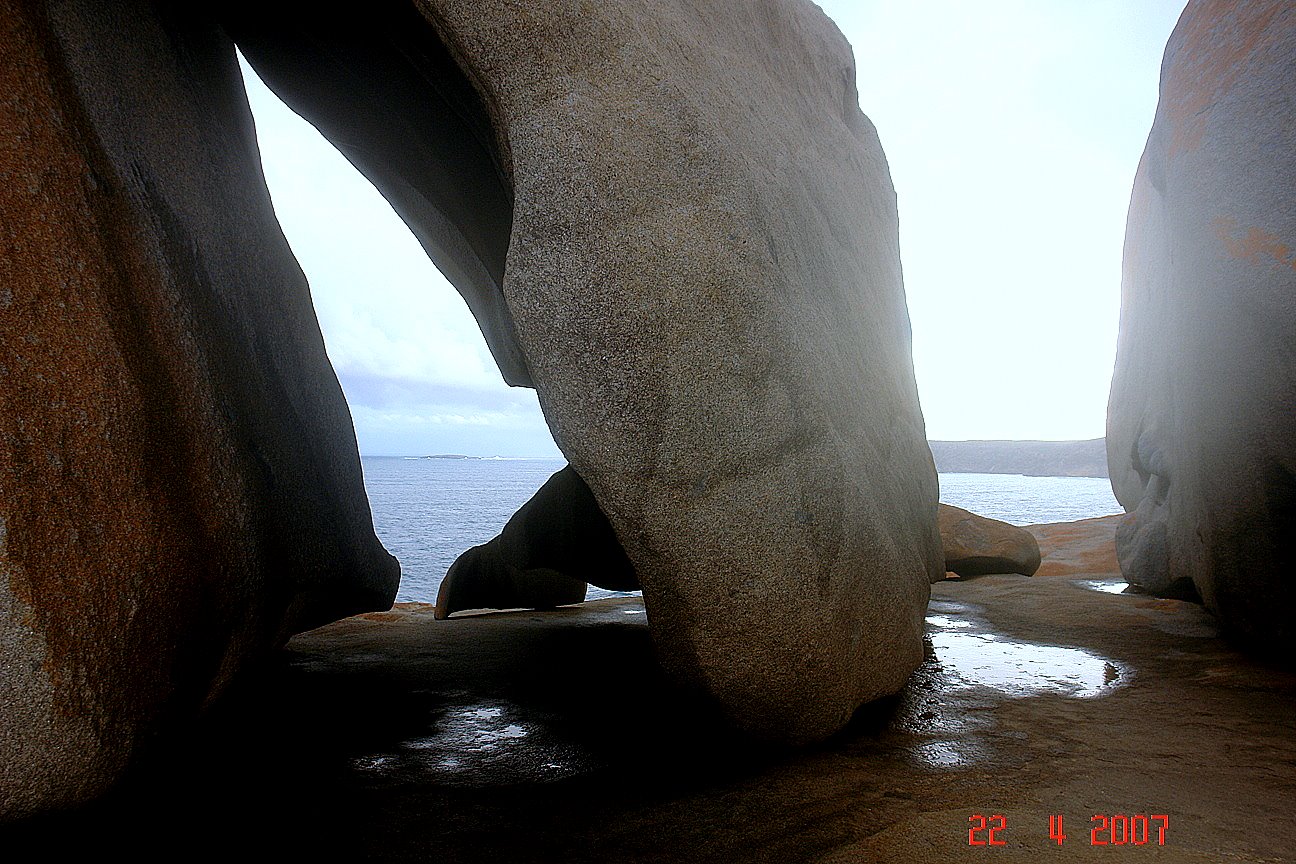
Gary Sauer-Thompson, Remarkable rocks #3, 2007
The history of philosophy, from Plato's banishment of the artist to Richard Rorty's “linguistic turn,” resolutely set its face against the image. As Wittgenstein put it, “a picture held us captive, and we could not get outside of it.” Heidegger thought that modernity had trapped humanity in an “age of the world picture,” and that philosophy (or poetry) might find a way out of it.
the pictorial turn,” the treatment of the attack on images, not as an automatically reliable strategy, but as itself a cultural phenomenon that needs critical reflection and theorizing.
|


"The picture held us captive"...
What was meant by this, and how do you reconcile the "attack on images" (by whom?) with the current dominance of visual culture.
This is interesting.
I falso find thse pictures beautiful and restful. They make me wish to go to kangaroo island.
btw, I am holed up in a storm-induced blackout. Only the airport seems to work!