|
September 28, 2007
I've been at the Australian Psychological Society's annual conference in Brisbane this week and I noticed a stall for the bendi lango art exhibition. I did not have the time to go and have attend.
The images are online:
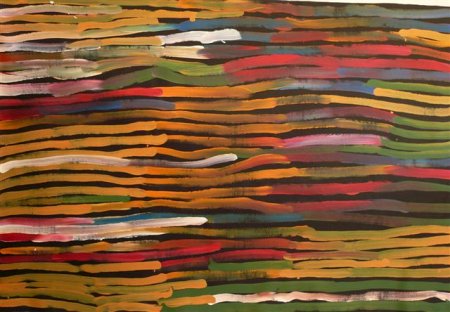
Minnie Pwerle, from the Awelye-Atnwengerrp series
Minnie Pwerle is from the Utopia region approximately 300km north east of Alice Springs. Utopia artists have been at the forefront of the contemporary Aboriginal art movement since the artist Emily Kngwarreye came to the attention of collectors and institutions in the 1990s.
Since then, distinguished artists such as Gloria Petyarre, Kathleen Petyarre, and Barbara Weir (Pwerle’s daughter) have risen to prominence and have captured the attention of the art world.
Minnie Pwerle was born around 1910 near Utopia in the Australian central desert. It was not until 1999 that she painted her first canvas and rapidly drew the attention of both local and international collectors. Minnie is now regarded as one of Australia's most important indigenous talents and is compared with her late friend and contemporary, Emily Kngwarreye.
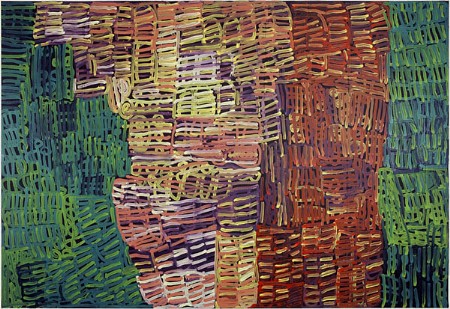
Minnie Pwerle, Awelyle, 2003
The Awelye-Atnwengerrp paintings were developed directly from Pwerle's experience as a ritual body-painter and they resemble the patterns and designs used in these ceremonies, in which a variety of powders ground from charcoal and yellow and red ochres are finger-painted on the breasts and upper bodies of the singers and dancers. Awelye signifies Women's Ceremony, and Atnwengerrp refers to Pwerle's country.
|


Gary,
these are great images.I would have loved to have seen the exhibition. Is it on tour?