Thought-Factory.net Philosophical Conversations Public Opinion philosophy.com Junk for code

Mandy Martin, Puritjarra 2, 2005. For further information on MANDY MARTIN, refer here: http://www.mandy-martin.com/
If there are diverse kinds of knowledge and ways of knowing place, then we need to learn to value the different ways each of us sees a single place that is significant, but differently so, for each perspective.
RECENT ENTRIES
SEARCH
ARCHIVES
Library
Thinkers/Critics/etc
WEBLOGS
Australian Weblogs
Critical commentary
Visual blogs
CULTURE
ART
PHOTOGRAPHY
DESIGN/STREET ART
ARCHITECTURE/CITY
Film
MUSIC
Sexuality
FOOD & WiNE
Other
www.thought-factory.net
looking for something firm in a world of chaotic flux

Social networking: SA photographers « Previous | |Next »
November 14, 2007

This image refers back to the urban arboreal post, but is more minimalist. Summer has arrived in Adelaide--- we are in a couple of works of temperature in the mid-thirties and I am very conscious of the lack of shade in walking the streets. I don't bother.
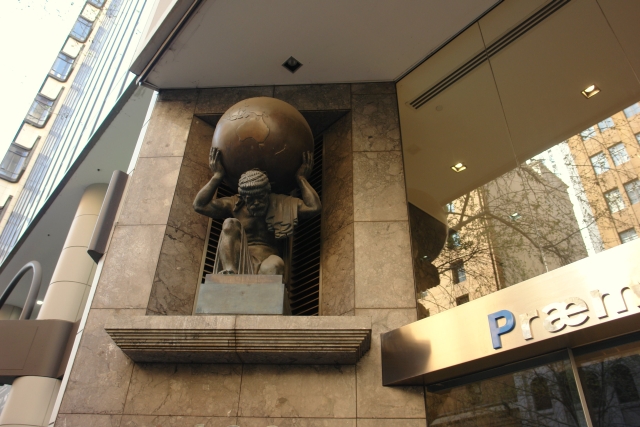
Atlas.jpg
Gary Sauer-Thompson, Atlas, Collins Street, Melbourne, 2007

I've started a Flickr gallery and whilst getting it going I stumbled on this local photographic exhibition of Flickr-based photographers at the Wheatsheaf Hotelin Adelaide in July 2007. Though I cam across the the work of local photographers: such as Stephen Mitchell and Jennifer Anne, then Mandi Whitten, who has an interesting web design business Weensyweb Design.

So what? Doesn't this happen all the time on the web?
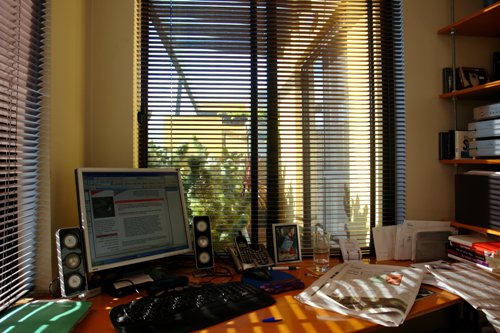
office.jpg
Gary Sauer-Thompson, office, Adelade, 2007

Flickr.com is definitely social networking just as much as MySpace and Facebook. All have good functionality. I know very little about LinkedIn, which is aimed at professionals, or Xanga, a blog-based community site. All are based on the idea of joining online communities and being able to participate in them. Google is currently behind the curve of the social networking trend.

Flickr's stickiness is due both to its functional value and community value, since its online connections enables photographers to talk to one another though photographs, rather than being talked to does the mass media. It helps photographers to meet new people and organize around common interests---in my case photographers interested in street culture.

What this points to is the possibility of social networking sites that really made an effort to allow not just the free flow of data, but also the free flow of relationships.

| Posted by Gary Sauer-Thompson at 06:32 AM | | Comments (3)
Comments

Comments

Gary
Facebook is not a social utility that connects you with the people around you. It's becoming a simple platform for advertising and people are going to become annoyed with it.

Pam,
I know. Still it is about building online communities despite the online advertising. My guess is that the traditional journalist crowd hates social computing, social media, and social networking.

As noted here the standard articles about blogs, Facebook, MySpace and social networks quickly shift into one's about stalkers, paedophiles, time-wasters at work, mis-information, lack of editing and poor grammar/spelling.

Here it is claimed that many conservative educators view social technologies as a product of the devil, bound to do nothing but corrupt and destroy today’s youth. Utterly confused, the vast majority of educators are playing ostrich, burying their heads in the sand and hoping that the moral panics and chaos that surround the social technologies will just disappear.

Gary,
the Danah Boyd article you linked to Social Network Sites: Public, Private, or What? at the Knowledge Tree is interesting. She says that Social network sites are yet another form of public space--a mediated one.

Just like journalists, participants in social network sites imagine their audience and speak according to the norms they perceive to be generally accepted. The difference is that journalists are trying to carefully craft a message to energise a targeted audience, while teenagers are just shooting the breeze, showing off, and just plain hanging out amongst the people they call friends. The ephemeral speech that would be acceptable in any unmediated public with a homogenous audience is not nearly so well-received in a mediated public with variable audiences.

Boyd ties Facebook too closely to teeenagers--digital adults are into Facebook and social networking as well.

 
Post a comment

(If you haven't left a comment here before, you may need to be approved by the site owner before your comment will appear. Until then, it won't appear on the entry. Thanks for waiting.)

Name:
Email Address:
URL:
Remember personal info?
Comments: (you may use HTML tags for style)