|
February 17, 2007
This denuded landscape in Tunbridge, in the Tasmanian Midlands looks like parts of South Australia in summer time. The paddocks are no longer lush and green and the hills are bare of trees. The landscape is all grazed completely out by sheep. Agriculture rules.
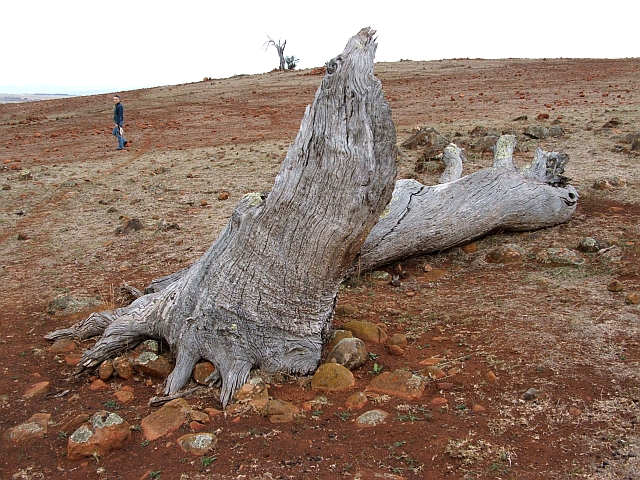
Barbara Health and Malcolm Enright, Suzanne, Tunbridge, 2006
The future is not bright for the Midlands. CSIRO has stated that the drought that is being experienced in Tasmania at the moment is very much shaped by global warming.The impact will vary across Tasmania significantly with agricultural areas to be hit the hardest. With declined rainfall and increased temperatures, some of the native forests in Tasmania will be badly affected. The ecology of Tasmania is changing.
But the damage has already been done to the native grasslands in the salt afflicted Midlands landscape by agricultural practices. Much of Tasmania's native grasslands have been replaced by the bright green of introduced pasture which turns yellow in the drier weather. They began to lose their vigour as hard-hoofed, close-cropping stock were introduced to these areas. Farmers began replacing native grasslands with introduced grasses, but this required improving the soil by ploughing and adding fertilisers. Continuous ploughing removed the long-lived native grasses allowing the introduced species to invade and out-compete them.
This is tragic since native grasslands support a huge variety of native Australian plants and animals. The Tunbridge buttercup is a tiny plant is listed as a threatened species and is restricted to four properties. A large variety of orchids occur in native grasslands.
|


