|
August 7, 2014
The widespread surveillance of activity on the phone and online advocated by the spooks and government allies in the name of security paints us all as potential criminals. Just in case we do the wrong thing, or are up to something, it would be best to keep an eye out.
When we haven't consented to that, the surveillance becomes invasive. WikiLeaks, the phone-hacking scandal, the Snowden files indicate he extent to which our communications are being monitored by the e triumvirate of state, press and data-harvesting corporations.
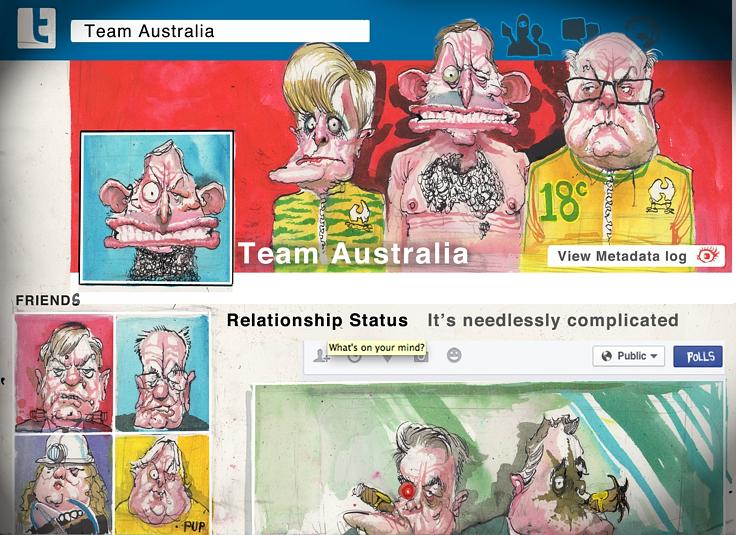 David Rowe
The menace is within say the spooks. An emergency is threatening. Mass surveillance is needed.
So how wide is the proposed surveillance. It's very unclear what stuff is going to be subject to surveillance. Behind the pantomime and confusing messages the emphasis on security does appear to sacrifice individual liberty through state intrusion into our phone calls, physical location, and our email and browsing history.
The spooks message is that "If you have nothing to hide, you've nothing to fear." However, our rights about our private lives are being handed over so that our secrets are revealed through mining our virtual identities. Yet, we can count on, the two major political parties will stitch together a deal which will sideline all meaningful democratic deliberation. Parliament will be bounced.
The spin will be that a statutory boost to the security services, enabling the trawl through records of private internet and mobile phone traffic, was a draconian anti-terror measure thrust upon the politicians by terrible circumstance. Labor has already decided to support the government position, claiming to be satisfied by the argument that urgent legislation is required and satisfied with the safeguards to protect civil liberties.
The use of the national security argument as an excuse for riding roughshod over fundamental freedoms enshrined in law underscores that the Australian political establishment, which voted for this law, has lost its moral compass.
|





There is no justification for us all to be regarded as suspects of terrorism or a meaninglessly broad category of “general crime”.