|
August 25, 2003
This is something I've always puzzled about but I had given up considering when I stopped going to the movies and started watching television instead.
There is a common position---an habitual lived one----that assumes an antagonism between a cinema that might be thought as part of the culture industry (Hollywood) and a cinema that might be thought to be art (modernist European cinema--eg., Eisenstein) centred on the figure of the auteur. It is a lived one usually to be found on the left. Well, that is where I have encountered it.
I guess this division of splitting art from industry came about because few people want to hold that all of the products of cinema belongs to the culture industry and none belong to art. Some films---the good ones--should be considered to be works of art.
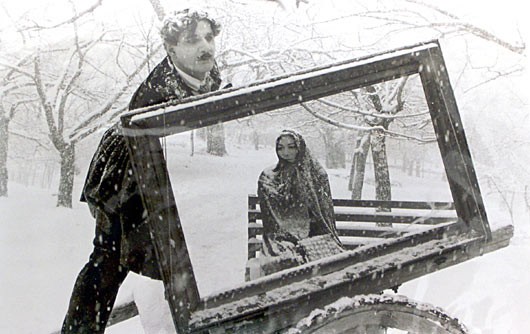
Makhmalbaf
I guess its reasonable position. Both Citizen Kane and Ivan the Terrible are much better films than Rocky IV.
This division between industrial and art cinema has been institutionalized. Consider the mass cimema complexes and chains of the market and and the anti-market of the festival circuit, 'alternative' distribution, cinemathèques clustered around independent film making. It is almost an antagonistic relationship.
It's a division that I live in my daily practice. About once a year I go to the art house to watch this film
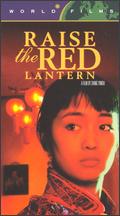
by a director that many people consider to have consistently produced quality work. Or I watch this
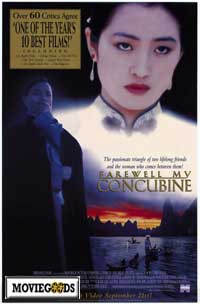 " "
film by Chen Kaige.
I see a lot of trash movies on free-to-air television. I now visit the DVD stores for films by artist directors who are marketed in terms of a romantic conception of the auteur. I translate that into 'expressive creative artist' as I flick through the DVD's.
The reason I gave up going to see arthouse films and film festivals is not because I live in the provinces (Adelaide) rather than a global city (Sydney). It is because I thought that many films that appeared to be art were actually the products of industry. They were a part of the culture industry and only shown as art because they were European. Art was a con. I got bored and found the art cinema culture to be too precious. There was not much pleasure.
I found it much better to watch trashy Hollywood narrative movies on the television and to enjoy them and allow my body to respond to the desiring images with pleasure. They are trash but pleasurable.
The other reason for turning away from film as art, at a time when many in the humanities abandoned literature and embraced film studies, was that I had little sympathy for the avant garde Screen Studies structuralist Theory (semiotics and psychoanalysis). Reading phenomeology turned me away from high theory and back to 'the things themselves' and to human experience as a kind of becoming.
So that is what I lived for the last decade. It is probably what most people have lived.
Now that I have a DVD player I'm back looking for the
contemporary masterpieces.
And revisiting
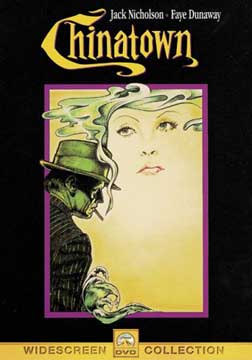
old favourites.
I'm thinking about philosophy and film from a phenomenological perspective.
|


One interesting manifestation of the divide is the requirement that colorization (this is an American law, I believe) of a B&W film can only be done with permission of the director -- no one else need be consulted. Seems to me as if a movie is aboveall a team effort but the auteur theory seems to have triumphed in Congress.