|
January 13, 2004
I've been painting the electronic cottage all day, getting it ready to rent. Most of those applying to lease it have been young professionals who work in the public service in the cityand want to walk to work. That is what I did when I lived there--- when I worked as a researcher in State Parliament after chucking in academia as a very bad joke.
Mine is a heritage cottage surrounded by trees and parklands located within a loose community where the people in the street still talk to one another. It is situated in an area that is well maintained by the Adelaide City Council.
Inner city living in Adelaide is a very attractive mode of living. Such a contrast to Leeds:
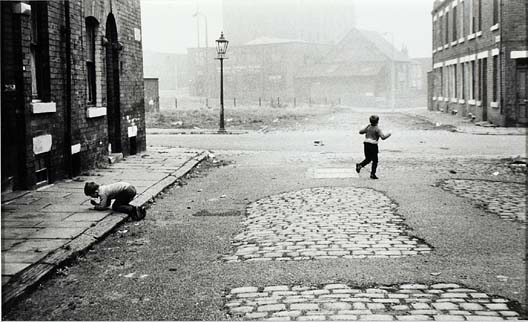
Jeffrey Blankfort, Leeds, England (Two Boys Playing in Street), circa 1971.
Not a tree in sight.
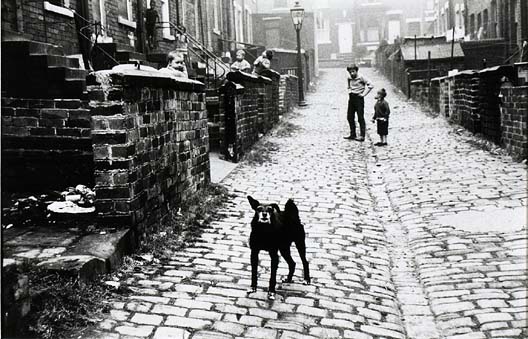
Jeffrey Blankfort, Leeds, England (Alleyway between Rowhouses, Boys Playing, Dog), Circa 1971.
The heritage cottage is a working class one built in the 1890's and it was a part of working class life and culture during 1940s and 1950s. The inner city was seen as a slum in the 1960s and destined to be cleared in the name of modernization. But they were saved as heritage in the 1970s through the gentrification of the inner city.
My cottage cannot be pulled down. The street front can only be restored. The back can be modernized. I've been doing neither this past fortnight. I've just been plugging away giving the place a facelift inside.
The street is filled with Queensland Native Fragipanis' even though most of the little gardens behind the heritage picket fences are mostly roses. Such a contrast to Ireland:
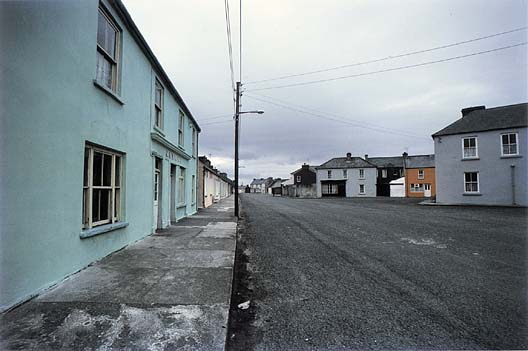
Harry Callahan, Ireland, 1979
I used to sit on the front porch in the late afternoon sun and leaf through photography books about America:
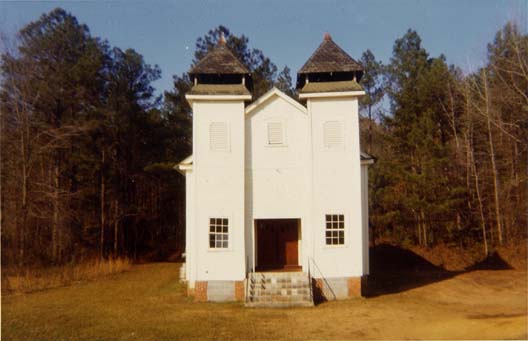
William Christenberry, Church--Sprott, Alabama, 1971
And I wondered. We have churchs like that in the country. And barns too:
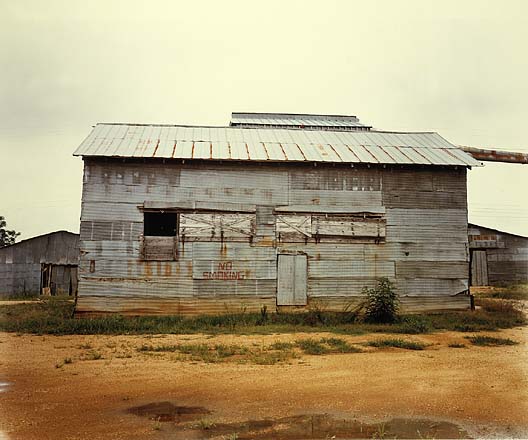
William Christenbury,Cotton Gin--Havana, Alabama, 1978/printed 1981
So why isn't anyone photographing them.
|


I like very much the reproductions of my photos from Leeds taken in 1970, but I am curious where you obtained them. I have been in an argument with some people in Britain about the description of the housing as "row houses" which is how they were described to me when I was there. I see you used that term, as well. They say that those houses are called "terraced houses" and the "row houses" is not a common British term. I'd appreciate knowing your source for it.
Jeff Blankfort