|
March 8, 2005
I don't have that much time for the Art Music paradigm based around the genuis composer and its system of notation, originality, individuality and property rights.
In his 'A History of Plunderphonics' Chris Cutler says that the first "plunder pieces" of the early musique concrete and John Cage works, such as 'Imaginary Landscape No.l' (1939).'Imaginary Landscape No.4' (1951), and 'Imaginary Landscape No. 5' (1955). These works belonged firmly in the Art Music camp where blatant plundering remained fairly off limits due to the tradition of originality and creating from scratch.
At that time there was little two-way traffic between high and low art (each borrowing and quoting from the other), which only proceeded apace with the arrival of postmodernism.
There was no real messing about with other people's work even though the importation of readymade materials into artworks has been a common practice and one which has accumulated eloquence and significance in a modernist and post-art institution.
In this essay entitled, 'Plunderphonics, or Audio Piracy as a Compositional Prerogative', John Oswald writes messing about with other people's work. He says:
"The reuse of existing recorded materials is not restricted to the street and the esoteric....the equipment is available, and everybody's doing it, blatantly or otherwise. Melodic invention is nothing to lose sleep over.... There's a certain amount of legal leeway for imitation. Now can we, like Charles Ives, borrow merrily and blatantly from all the music in the air?"
John answers the question this way:
'...as This Business of Music puts it, "The public domain is like a vast national park without a guard to stop wanton looting, without a guide for the lost traveller, and in fact, without clearly defined roads or even borders to stop the helpless visitor from being sued for trespass by private abutting owners."...'
The Beatles' tapework on 'Tomorrow Never Knows' from the 1966 LP 'Revolver' and 'Revolution No 9' on 'The White Album' are full of plundered radio material. So is the early work of Frank Zappa Varese-esque concrete pieces, such as 'Absolutely Free,' 'Lumpy Gravy' and 'Only In It For The Money,' all made in 1967.
A classic example of plunderphonics in pop culture is John Oswald's Greyfolded (1994)
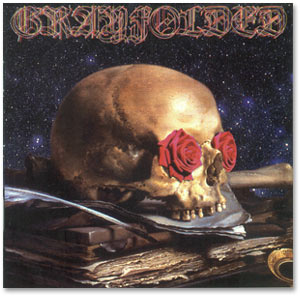 In the 1990s, at the invitation of Phil Lesh, Oswald took over 100 official recordings of the Grateful Dead's legendary song Dark Star. In the 1990s, at the invitation of Phil Lesh, Oswald took over 100 official recordings of the Grateful Dead's legendary song Dark Star.
These range from its fiery beginnings in the psychedelic cauldron of Haight-Ashbury in the '60's to the ultra-tech presence of the Dead in the '90's.
These recordings are built, layered and folded to create one new re-composed 2 hour song.
Oswald concludes his essay by saying:
"All popular music (and all folk music, by definition), essentially, if not legally, exists in a public domain. Listening to pop music isn't a matter of choice. Asked for or not, we're bombarded by it. In its most insidious state, filtered to an incessant bass-line, it seeps through apartment walls and out of the heads of walk people. Although people in general are making more noise than ever before, fewer people are making more of the total noise; specifically, in music, those with megawatt PA's, triple platinum sales, and heavy rotation. Difficult to ignore, pointlessly redundant to imitate, how does one not become a passive recipient?"
Does not Oswald's plunderphonics challenge our current understanding of originality, individuality and property rights? The old values and paradigms of property and copyright, skill, originality, harmonic logic, design and so forth are not adequate to a musical world opened by plunderphonics.
previous next
|


