|
July 7, 2005
It is raised here in The Age by Greg Barnes as low-level depression. He calls it the grey sadness:
"What colour is the world today? It's never black and hopeless, more grey and dull. You struggle to find blue sky because the sun's rays never seem to penetrate the pall of pale sadness that covers you from head to toe. But you can function like the average Joe. This is not the dramatic depressive episode about which the doctors, mental health advocates and media speak. The one where you can't get out of bed, you spend the day in tears and you are immobilised by the pain."
Barne's account of grey sadness is mocked by the libertarians over at Catallaxy. They argue that the grey sadness is personal not public, and so should not be featured in an op.ed in the broadsheet press.
That response ignores the strategy of the world's big, multinational pharmaceutical companies is to sell drugs to healthy people, to aim for "an ill for every pill", and undermine the independence and ethics of medical practice.
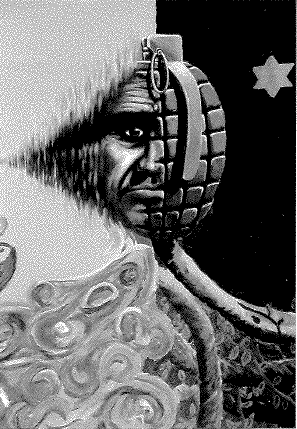 [TPH(Vietnam Vet & Art Group), photo Di Briffa] [TPH(Vietnam Vet & Art Group), photo Di Briffa]
Perhaps the libertarian's concern is that what Freud has called "the worried well" has become the worried sick though the medicalisation of some of the ordinary tribulations of human existence?
The impact of the medicalisation of ordinary life has created the culture of depression that is treated by antidepressants.
It is the medicalization of the gray sadness in the form of pills and the drug based cure that is sold by big Pharma, and pushed by GP's, psychiatry and the local pharmacy which is the problem.
It is the language of psychiatry that needs to, and should, be questioned.
|


