|
January 2, 2006
Utopia is part of the land of the Anmatyerre and Alyawarre speaking people who now have permanent land title over some 1100 square kilometers of their ancestral country. They have re-established their traditional culture and look after their land through ceremony and ritual just as they have done for thousands of years. The women of Utopia have been making art using the batik technique since the late 1970's. In the summer of 1988-89 these artists began making their designs on canvas, using paint, rather than the batik method.
This painter from the Utopia community, north of Alice Springs, only began to paint her seventies:
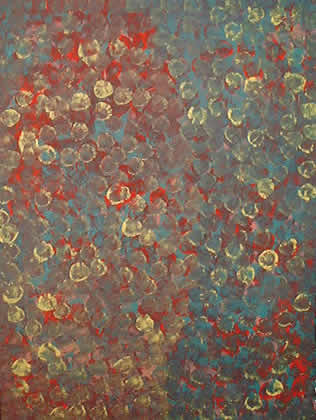
Emily Kame Kngwarreye, Wild Potato, 1995, Acrylic on linen
Her work cannot be categorized as primitive art, which is the tradtional category the 20th century modernist art institution assigned to aboriginal art. This category implied the idea of art being in a state of continuous progression from primitive to the European avant garde of the 2oth century. Primitive art was usually exhibited in terms of its influence on the big names of western art. That meant aboriginal art could only be hung on Europen art pegs---as was the case in the Australian National Gallery circa 1983
Emily Kame Kngwarreye changed her style repeatedly:
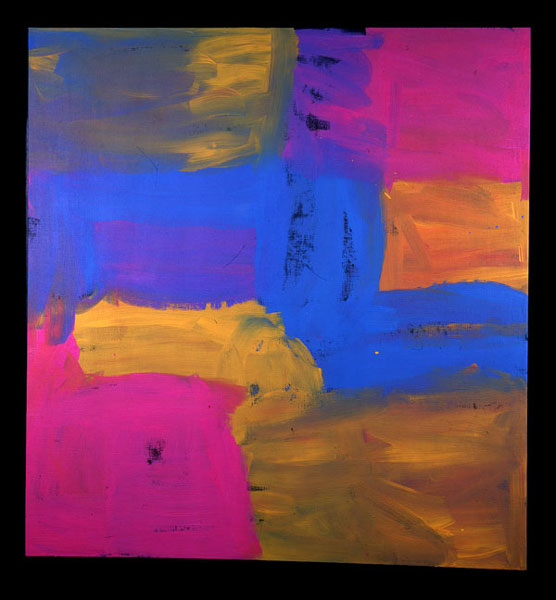
Emily Kame Kngwarreye, Last Series, 1996, acrylic on canvas
Her work fitted into the expectations and criteria of the modernist aesthetic and echo many themes in the recent history of European art.
|


