|
September 22, 2006
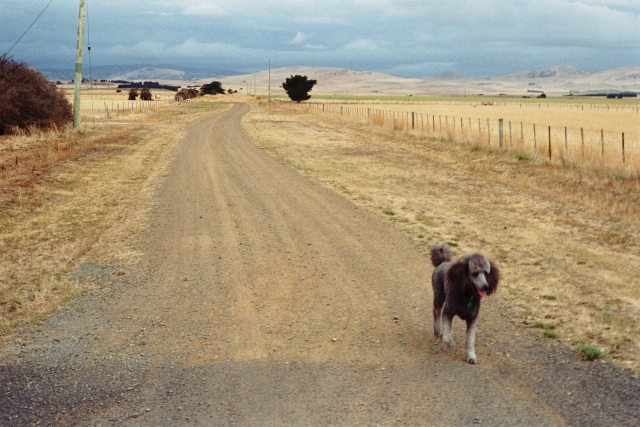
This snap from the side of the road of the Midlands highway was taken near Tunbridge, in the Tasmanian Midlands in February this year. We were in Tasmania on holidays.

Gary Sauer-Thompson, Midlands, Tasmania series, 2006
This is farming/pastoral country along the Heritage (Midlands) Highway that connects Hobart to Launceston. The Midlands region is characteristed by a lack of trees and it is very familar to the South Australian landscape. The landscape is in need of some old-fashioned landcare.
Can we talk in terms of the tourist eye? We do have the phenomenon of the work of international visual artists responding to their experience of traveling and living within various cultures. I don't know what the tourist eye would be.
This image has its roots in the edgy reworking of the 35mm black and white film documentary aesthetic (based on the Leica rangefinder with Tri-X film) by street photographers such as Robert Frank and Garry Winogrand; a reworking which incorporates the subjectivity of the photographer and embraces a more expressive aesthetic:
Gary Sauer-Thompson, Agtet, Tasmania series, 2006
The street photography kind of image making presuposes the patient, solitary prowling of one's own society that has its roots in Atget.
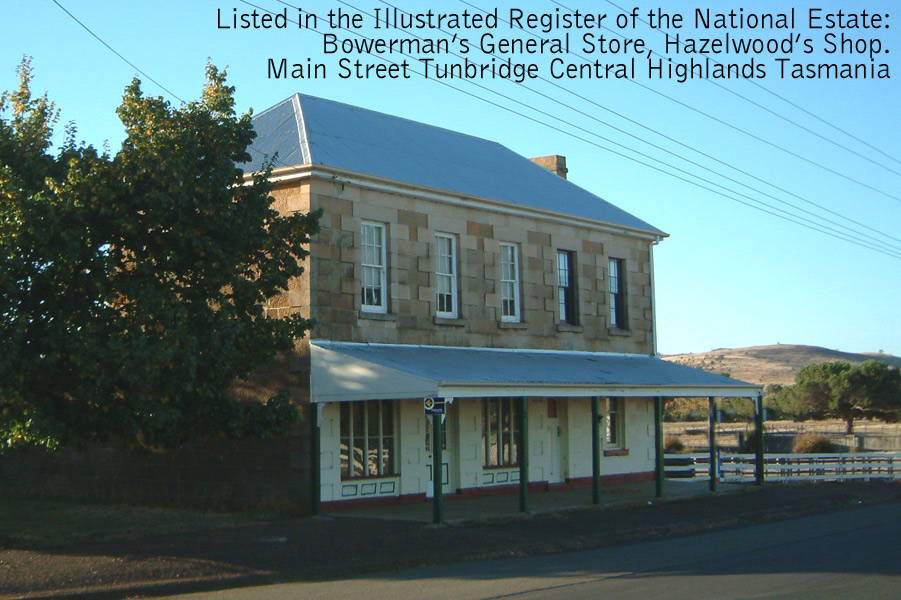
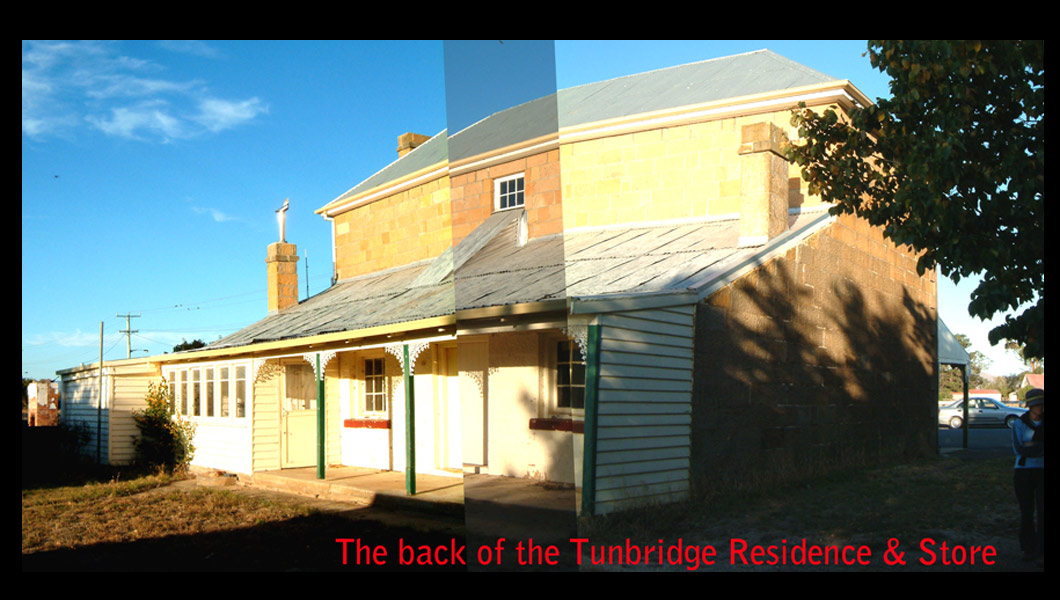
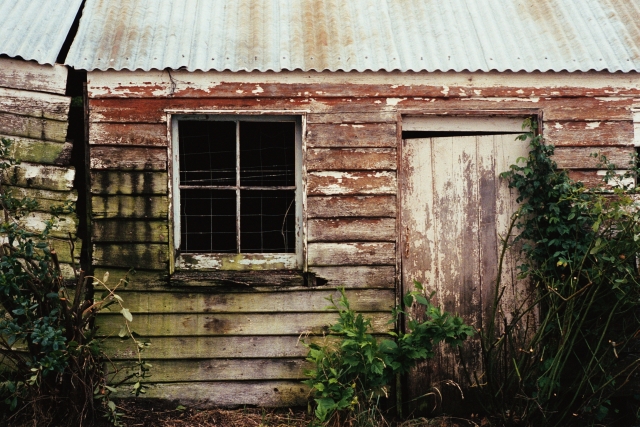
Suzanne, dogs and myself stayed a day or so with Suzanne's sister and husband--- Barbara Heath and Malcolm Enright---- who own, and are renovating, a Georgian store in Tunbridge. I was much taken by the shed in the backyard of the store:
Gary Sauer-Thompson, shed door, Tasmania series, 2006
We drove up to Tunbridge after flying into Hobart from Adelaide. We sat in the backporch of the store and chatted over drinks and nibbles. It was very hot for that time of the year:---a hot north wind was blowing across the plains, and it felt just like a South Australian summer. That was the very situation we were in Tasmania to take a break from. The locals said the hot weather was usual--but unusual weather is normal these days.
The style of the photography is prior to John Szarkowski's publishing William Eggleston's Guide, a book of photographs in the colour negative medium that on first glance appeared to be about nothing much at all, but which highlighted Eggleston as a lyric poet of the everyday. This was anti-street photography that rejected the reliance on an enigmatic visual drama, a central, essential event or "punctum," as Roland Barthes would say.
previous
|