|
March 27, 2007
Late this afternoon I wandered down from Kingston to Manuka taking some photos of graffiti along the way. I went to pick up a book on order from Paperchain bookstore ---Martha Bayles Hole in our Soul: The Loss of Beauty and Meaning in American Popular Music. The text breaks with the gonzo rock journalist who thinks he is a rock star and considers rock music to be the authentic expression of revolution, and is a declinist account of modern music because it moves away from its Afro-American roots.
A classic example from 1967:
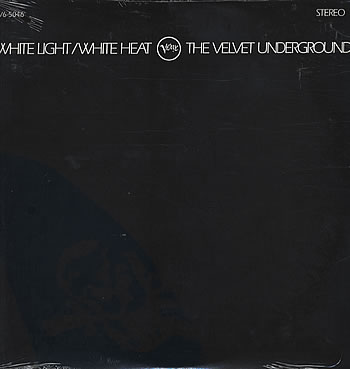 Mayles is poor on both the Grateful Dead ---crowd pleasing stoned music with little musical content ---and the Velvet Underground --Dada happening with amateurish primitive musical accompaniment. Mayles is poor on both the Grateful Dead ---crowd pleasing stoned music with little musical content ---and the Velvet Underground --Dada happening with amateurish primitive musical accompaniment.
Authenticity is black music (blues and jazz) and it is polluted by an injection of attitudes and approaches imported from the European modernist avant-garde.
The text is less a go at Adorno's ignorance of Afro-American music and more a nativism deeply at odds with artistic modernism. What we have is a cultural conservatism grappling with radical freedom and thes rejection of traditional morality in European modernism.
Bayles writes:
The central argument of Hole in Our Soul is that the anarchistic, nihilistic impulses of perverse modernism have grafted onto popular music where they have not only undermined the Afro-American tradition, but also encouraged today’s cult of obscenity, brutality, and sonic abuse.
By "perverse modernism" Bayles refers to the strain of "anti-art" that has its origins in the poet Rimbaud—who rejected his own poetry as "absurd"—as well as futurism, Marxism, and the early 20th-century dadaist who held artistic standards in contempt. These groups viewed art itself—with the exception of their own negations, of course—as "bourgeois" exercise ripe for parody and deconstruction. They're European intellectual poseurs.
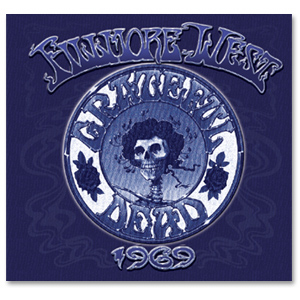 Bayles' nativist account ignores the Grateful Dead's first major flowering as a long-form experimental group.These concerts in 1969 are by rock musics greatest improvisational band at their earliest peak. Bayles' nativist account ignores the Grateful Dead's first major flowering as a long-form experimental group.These concerts in 1969 are by rock musics greatest improvisational band at their earliest peak.
In these 1969 concerts the avant gard band developed the template for Grateful Dead concerts for decades to come: a compact set of discrete, relatively short songs, followed, after a break, by a set of longer, free-form jams built around the skeletons of a few select numbers.
The Bobby "Blue" Bland R&B classic "Turn On Your Lovelight," based around Ron "Pigpen" McKernan's vocals and stage charisma, was a two-chord song that the Dead played with an almost bebop-like level of improvisatory complexity.
This review by Mark Grieff in the London Review of Books makes more sense than Bayles, as it links the Velvet Underground and the Grateful Dead as musical groups:
Suppose one connects them, following chronologies rather than personal histories, to a part of the California scene they are held to oppose, but with which they share an uncannily similar history.I’m thinking of the Grateful Dead. In the musical-historical imagination – with its New York v. California, but especially its punk v. hippie oppositions – the Dead ought to be the exact antithesis of the Velvet Underground.
The similarities are not just the tight association between music, and drugs, happening and light shows.
The most striking fact is that, like the Grateful Dead, the Velvet Underground started out as a platform for extremely long, wandering, repetitive, live improvisations, appropriate to multimedia events. It’s eye-opening each time the Velvets’ principals insist in interviews that they were far better as a live band than in anything captured on record. Yet they all do. David Fricke, in his notes accompanying Peel Slowly and See, the Polygram reissue of their four albums with out-takes, quotes Morrison, Reed and Tucker all complaining about the failure to capture their live work, and he alludes to unrecorded work like ‘Sweet Sister Ray’, a sometimes forty-minute-long improvisational prelude to live performances of ‘Sister Ray’. The Dead cultivated a ‘taping’ culture of audiophiles who recorded each and every performance, which got people to imagine that the essence of listening to the Dead lay in ‘being there’ – and, at the far extreme, created a unique audience of people willing to listen to forty performances of ‘Dark Star’ to find the passages of improvisational transcendence in each.
The long jams in Fillimore West disc merge into epic suites; more soloing, less singing. Disc Two is dominated by the Dark Star -> St. Stephen -> The Eleven -> Death Don't Have No Mercy suite, totalling almost 43 minutes. Disc Three is one long suite anchored by "That's It For The Other One," a suite in itself, and which contains the "Drums" and "Space" (here called "Jam") sections that practically every Dead second set was to include thenceforth.
Sure both groups move away from the original bluesy roots of Afro-American music. The 'perverse modernism' of Europe actually gave rise to some very good and groundbreaking experimental music that pulsates with energy and primitivism.
|


