|
April 29, 2007
Looking back on the holiday I realize that I would go back and stay at the lighthouse cottages at Cape Willoughby for several days. It was one of the places on Kangaroo Island that I would like to sit for a while. It looked like a Greek Island with the white cottages and blue sky and blue/green sea, but it is without the mass postmodern tourism.
Cape Willoughby is off the beaten tourist track, which goes from the ferry at Penneshaw to Seal Bay and Cape de Couedic, and it has a "sense of place" that transgresses the dominance of "space and time" in modernity. Cape Willoughby signifies a return something more primordial, even if it appears as a special in a tourist sense:
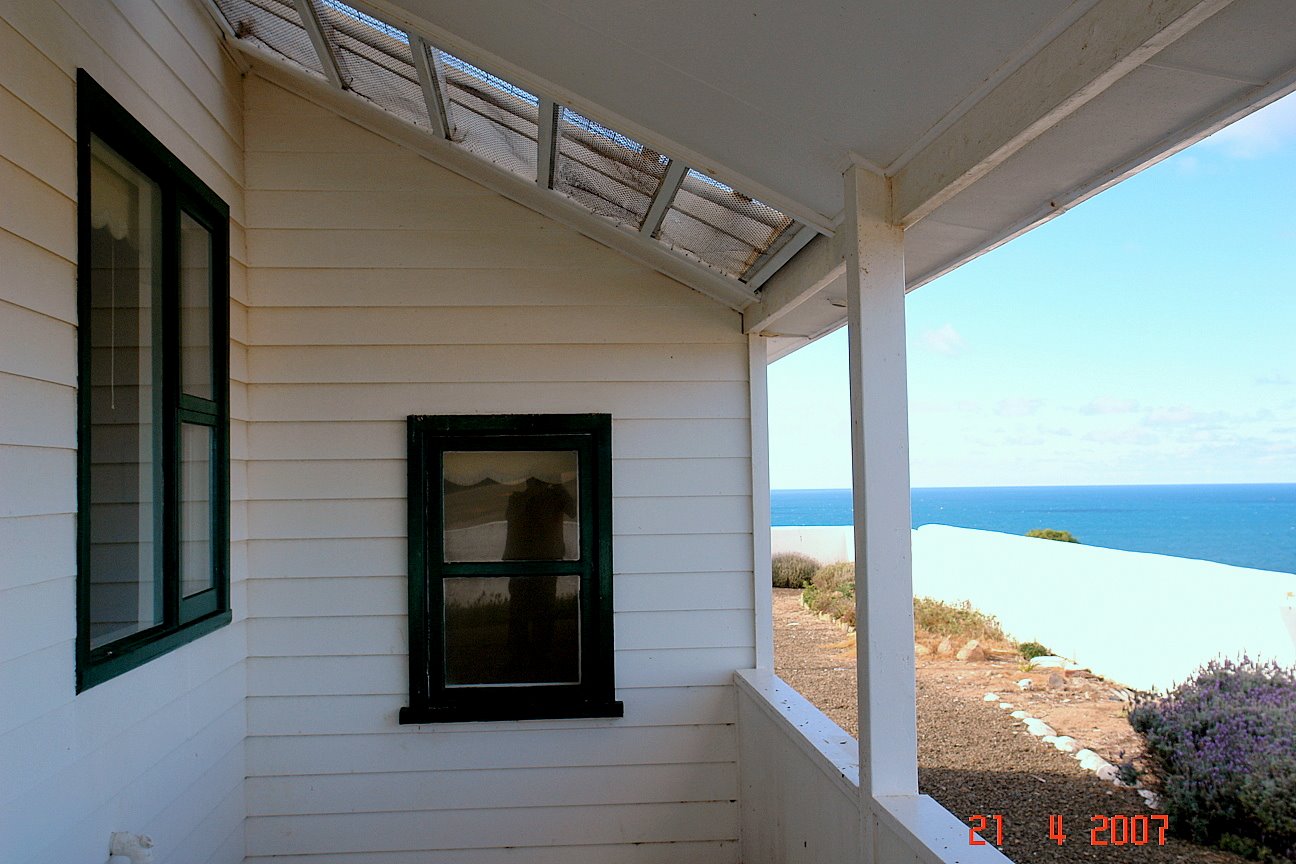
Gary Sauer-Thompson, Cape Willoughby cottage, Kangaroo Island, 2007
Cape Willoughby itself is dominated by a lighthouse, which was the first lighthouse built in South Australia (1852). It looks over the calm but treacherous Backstairs Passage, which is situated between the southern Fleurieu Peninsula and Kangaroos Island. The lighthouse is located on a spit of the Dudley Peninsular. From the front porch of the heritage lighthouse cottages, rebuilt in 1927, one looks back to the island with sea views of the Backstairs Passage on the left and right. The lighthouse signifies wildness, destruction and death.
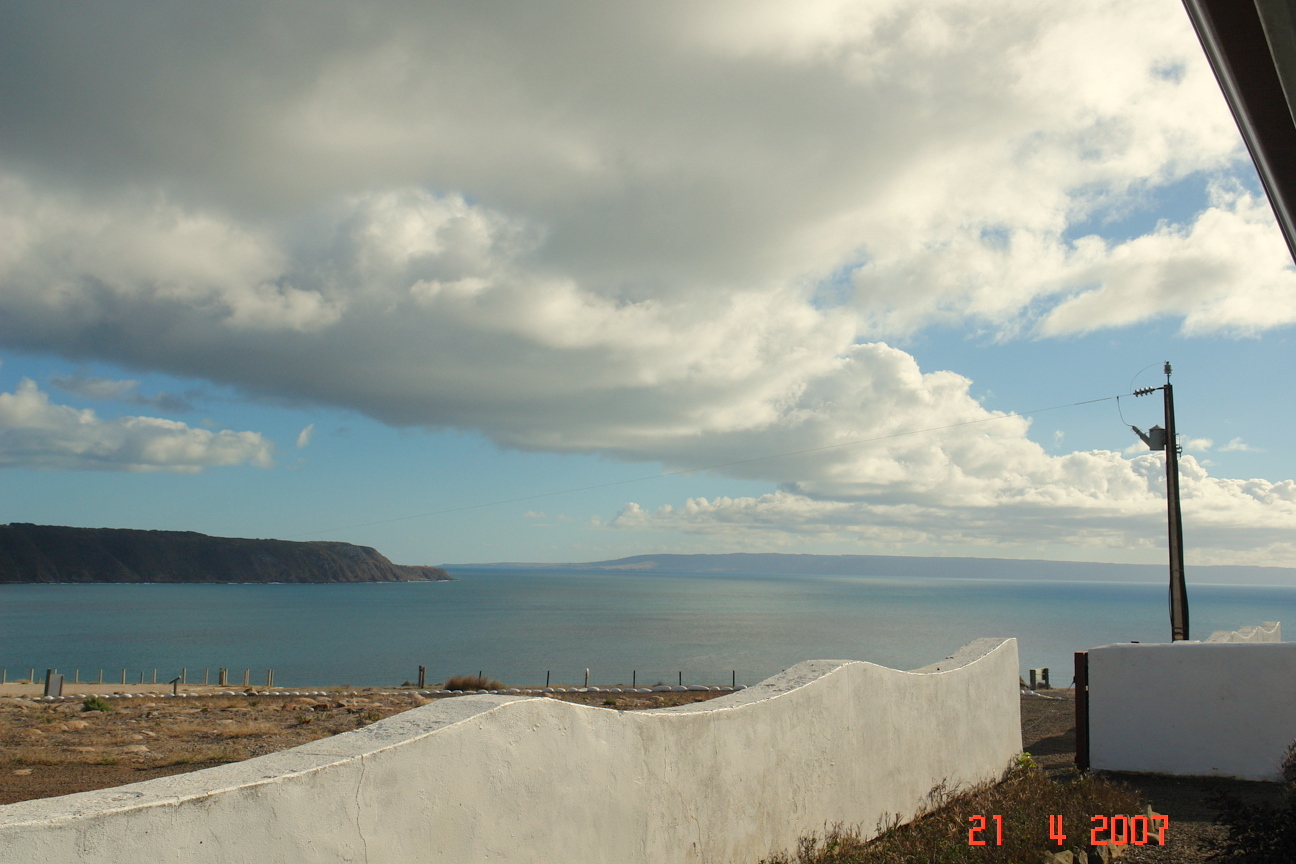
Gary Sauer-Thompson, view from porch,Cape Willoughby cottage,Kangaroo Island, 2007
Cape Willoughby is a small conservation park that is mostly about wild seas and towering cliffs. The difference from the Greek Islands was the sublime---in the sense of the awesome power of nature. As I noted earlier Eugene von Guerard’s Cape Schaank came to mind. The sublime is the surging sea.
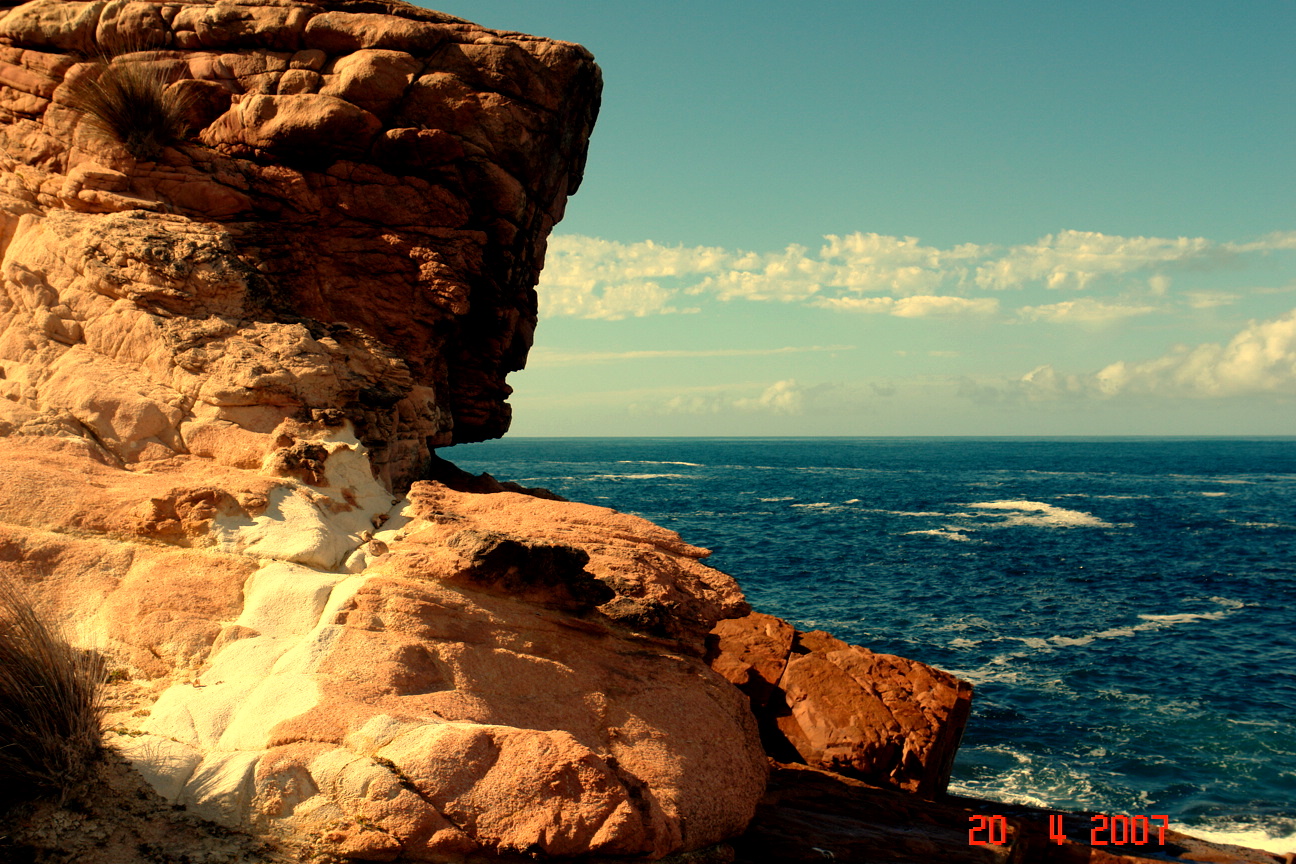
Gary Sauer-Thompson, rock + sea, Cape Willoughby, 2007
The weather was very summery, even though it was autumn, and so the long summer continued into mid-April. There is no rain. Nor was any expected when we were there. So the Island is drying out and its ecology is beginning to change—the correas, stingybarks and banksias are struggling, if not dying. The agriculture and pastoral industry looked to be on its last legs, whilst water was being trucked in to all the cabins we stayed at around the Island. The recent rains will not address the long decline in rainfall.
As I noted above Cape Willoughby is about place---in the sense of human beings are always and already human being situated in place rather than just a space. As Edward Casey set out in his The Fate of Place the history of place within the Western philosophical tradition has generally been one in which place has increasingly been seen as secondary to space—typically to a particular notion of space as homogeneous, measurable extension— and so reduced to a notion of position, simple location, or else mere “site.”
Cape Willoughby was no mere site-- a more or less arbitrary region of physical space. It is concrete and particular--- a place-world that resists to the imposition of our modern ways of giving order to the world. There are aspects of another kind of order to be found in th\is landscape, most importantly the dichotomy of heavy (of the earth or rocks) and light (of the sky), and movement (of the sea) and engaging with these leads to an orientation among wild places.
|


Are there any roos on the island? Its one of the places in oz I have never been to