|
June 15, 2007
This sure is thinking about pictures differently:
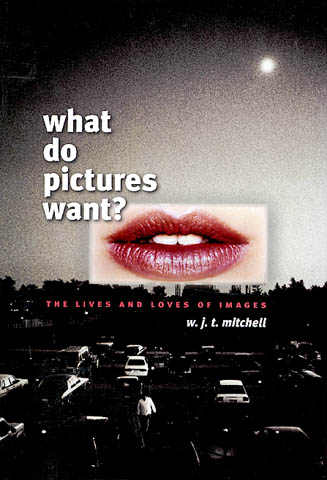
Mitchell says that they just want to be kissed. Aaah---what's a kiss. A gesture of affection and a desire to incorporate. Incorporate means to be eaten. So pictures want to be taken in by us.
It's a different way of looking at pictures to the dominant approach which has been, 'What do pictures mean?'--- ie., what overt or hidden messages do they convey, what set of values do they promote or denigrate? This approach places the emphasis on the picture as something that requires interpretation--a visual "text" there to be read, decoded or interpreted.
Pictures are more than just structures of information or ideas. Pictures also work affectively: They fascinate and move us, they work on our emotions and fantasies. So we shift the question of images into a different register, from meaning to desire. If pictures work on our emotions then power exists also in the "inside" of the image, as an energy it mobilizes from its own resources, its independent capacity to persuade or enthrall or overwhelm its beholders.
Norman Bryson says that this kind of power of images raises anxiety about the seductive power of images. The image of the book refers to David Cronenberg's Videodrome (1983), which envisioned a world where television directly impacted the viewer, even changing the viewer physically so that interaction could be made easier yet. The image of desire (female lips and mouth) breaks out of the television screen and invades the real world, literally devouring the male spectator.
A widespread topos in postmodernism is that mediated images--in cinema and television--have come to function in new ways, no longer representing the real world but replacing or supplanting it. In the "society of the spectacle," the image dictates to its viewers the terms of their reality (Debord, Baudrillard). For Mitchell, what is interesting in this kind of account is not whether it offers an accurate description of the contemporary world but rather the way it expresses contemporary anxieties concerning the power of the image to go its own way, to "walk by itself"--anxieties that, he suggests, suffuse the whole cultural climate.
|


