|
November 23, 2007
This image is like a graffiti wall---an eclectic mix of colours and collaged images organised in layers--- that takes its vocabulary from movies, television, the computer, the Internet, and the Xerox machine:

Robert Rauschenberg, Rebus, 1955
If Rauschenberg turned collage into assemblage, then I interpret them as graffiti, archaeology and time. Time in a city in modernity is different: its pace is different, as are its rhythms, its moments and the way they speed up and slow down. The urban pace overlays the natural one of sunrise, sunset, cloud, wind, sun and rain.
Time is change, and change is what makes a metropolis a living entity, subject to an ongoing cycle of birth, growth, decay, and rebirth—not the frozen lines, squares, grids etc of the urban planner; or the shapes and profiles, lifeless artifacts and empty proclamations of a “metropolis” on the pages of glossy magazines that celebrate sensational Adelaide.
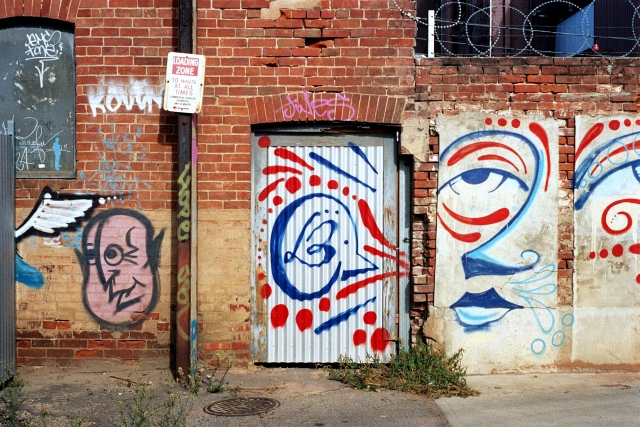
Gary Sauer-Thompson, painted doorway, Adelaide CBD, 2007
This understanding of time enables us to stand between Warhol's alliance with a power that was, effectively, changing things—the media of a corrupted public sphere of the culture industry--- and Bataille's plunge in the other direction, that of the underground cult. The transgressions of the latter open the way to the world of gods, feasts and sacrifice that lay beyond law, beyond prohibitions, and which re-establishes the sacred as a primary force in modernity.
This standing between is expressed by the explorations by Dogmatic in Melbourne.
|


