|
January 24, 2008
Brasília became the Brazilian nation’s capital on 21 April 1960, the city having been designed in the shape of a sprung bow and arrow, signifying future potential. Gathered around a lake, the futuristic city's plan takes the form of a giant bow and arrow (or aircraft, or bird in flight), in which Oscar Niemeyers' sculpted concrete monuments rise. In four years Niemeyer and Lucio Costa created a city of monumental architecture that was 1600 km from the main population centres, in an area with no communications, and only one natural resource... land.
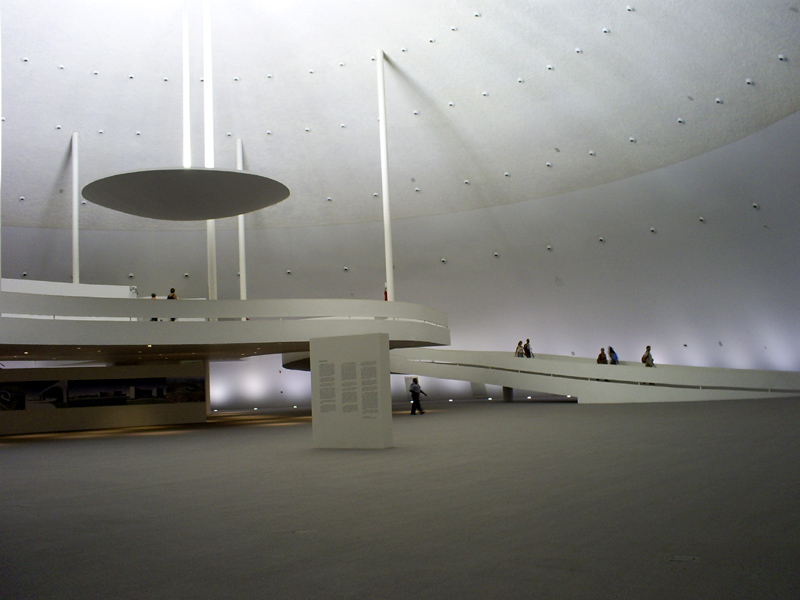
The city was built as a complete break with past in true spirit of heroic 20th-century modernism as a possibility to recreate the destiny of the country. Brasilia offered redemption from the awful history of a plantation economy based on slavery. The country's history had to be negated. Brasilia symbolized the inevitable movement from backwardness to modernity. Progress would enable Brazil to shake of the bonds of colonialism and leave its past behind, and embrace the future.
 Simon Norfolk, Oscar Niemeyer's Cathedral of Brasilia in front of the government ministries, 2005
It was Costa who envisioned the huge blocks of government offices, the sectors for banks and housing, everything positioned like chess pieces on a board, crisscrossed by boulevards. Niemeyer was then enlisted to design the major buildings -- fanciful, spectacular structures that breathed life into Costa's urban plan. Its a city of cars that move in endless streams along the broad avenues and around the cloverleafs (Costa designed the city without traffic lights, sidewalks or intersections). The cars are practically the only things in sight that move. In a place of nearly 2.5 million residents, there are few pedestrians. 'The street does not exist.
|


