Thought-Factory.net Philosophical Conversations Public Opinion philosophy.com Junk for code

Mandy Martin, Puritjarra 2, 2005. For further information on MANDY MARTIN, refer here: http://www.mandy-martin.com/
If there are diverse kinds of knowledge and ways of knowing place, then we need to learn to value the different ways each of us sees a single place that is significant, but differently so, for each perspective.
RECENT ENTRIES
SEARCH
ARCHIVES
Library
Thinkers/Critics/etc
WEBLOGS
Australian Weblogs
Critical commentary
Visual blogs
CULTURE
ART
PHOTOGRAPHY
DESIGN/STREET ART
ARCHITECTURE/CITY
Film
MUSIC
Sexuality
FOOD & WiNE
Other
www.thought-factory.net
looking for something firm in a world of chaotic flux

modern living « Previous | |Next »
March 24, 2008

The 60 year old movement to the suburbs is being counterbalanced by the movement back to urban living in the inner city. Back then the suburban dream embodied in the General Motors Pavilion was "the world of tomorrow. ride called the The Futurama-- in the New York World's fair of 1939 and 1940 is fading, even as the suburban grid continues to spread out around our capital cities.

letterboxes.jpg Gary Sauer-Thompson, letterboxes, Adelaide CBD, 2008

This turn away from suburban life and a return to the city as a space where Australians live and work involves suburbia being re-interpreted as a bleak world, as the outer suburbs on the city fringe are segregated from work, shopping and entertainment. Urban life in contrast, is seen as exciting, diverse and vital. So we have the regeneration of the inner city.
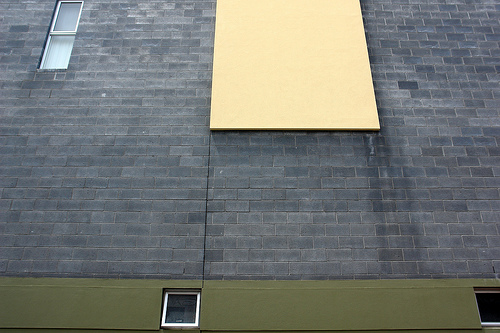
Adelaidewindow.jpg Gary Sauer-Thompson, window, Adelaide CBD, 2008

If conventional suburban lifestyles are falling out of fashion as a walkable urban lifestyle comes into favour what is going to happen to the cheaply built McMansions and the large suburban residential areas being built on the edges of our cities? Will they deteriorate in value? Will they become a region of lower -income families and rental properties? Will the car-based suburban regions decline the way the inner city did in the 1960s--becoming magnets for poverty, crime and social dysfunction?

I don't know the answer to these questions. I'm not even sure our town planners are thinking in terms of the outer suburbs declining and becoming dysfunctional. They are still thinking in terms of an ever expanding suburbia.

| Posted by Gary Sauer-Thompson at 5:23 PM | | Comments (7)
Comments

Comments

And of course WW2 broke out in 1939 too!

Welcome to the REAL future.

A war which effectively finished off the destruction of global civilization which begun with WWl

"World War I and World War ll were, effectively, the self-destruction of global civilization. As a result of these two happenings, and everything associated with those happenings, the self-organizing, self-correcting, and self-rightening principle of humankind was destroyed. Now nothing but "Narcissistic" ego-culture remains, and the consequent human devastation."

Perhaps everyone who attended the World Fair should have been given a copy of Huxley's Brave New World and Orwell's 1984 (if it had been in existence) too---to enable them to see what the future was really going to BE like.

I saw a report on the weekend that various people are beginning work on a film version of Brave New World.

Gary,
Possum Comitatus has some interesting ideas about urban/suburban/regional distributions re: solving the housing crisis. He's suggesting a combo of affordable housing in regional hubs with economic support depending on the provision of broadband to encourage dispersal of service industries. It's an interesting proposal, along with the notion that independent blogs can function as think tanks.

Lyn,
I had a quick squiz at the posts It's about housing affordability with the argument being that government policy needs to get wages rising faster than house prices over the next few years.

I'm arguing that house prices in the outer suburban car based fringe will decline with the movement back to walkable innercity urban environment.

Gary,
I think there's a reasonable argument to be made on a more circular or two way traffic between urban and suburban living. Young people tend to be drawn to urban environments because they're just more exciting than surburbia, but tend to go back to suburbia at the marriage/kids/house buying phase of life which, as we know, is now occuring later.

I'd argue that the walkable inner city urban environment is all very well until you have a couple of kids to be ferried around and daily shopping for groceries and eating out become rather more challenging. I did it myself for a while and let me tell you, walking and public transport lose their allure when you're dealing with groceries, an infant with a full nappy, a pram and either wobbly footpaths or moving buses.

A lot of the comments at Possum disputed the rising wages argument. To be honest I skimmed that argument, happy to be baffled by economics. I was more intrigued by the possibility of urban-like hubs in regional areas, though Clarencegirl from North Coast Voices argued she lives in a regional area to get away from the urban environment.

There was an interesting article that appeared in the Fin Review over Easter by Christopher Leinberger about this situation of changing demand in the US for different types of residential living.

The full article can also be found over at The Atlantic:

http://www.theatlantic.com/doc/200803/subprime/2

Well worth a read.Particularly the bit about a projected surplus of 22 million large lot homes by 2025

Lyn,
It's not the young adopting the walking inner city urban lifestyle. The bay boomer empty nesters are downsizing and moving back into the city big time.

I reckon your movement out to the suburbs to have kids is also changing. Some people--ie., young professionals--- are having their kids in the inner city. The housing in the city is being built to accommodate them.

Possum,
thanks for the link to Christopher B. Leinberger's Atlantic article--The Next Slum? I'd seen it in the AFR on the weekend and it gave me the idea of using my photos to suggest another side to the exciting inner city urban life.

I understood this to be Leinberger's main point is:

The decline of places like Windy Ridge and Franklin Reserve is usually attributed to the subprime-mortgage crisis, with its wave of foreclosures. And the crisis has indeed catalyzed or intensified social problems in many communities. But the story of vacant suburban homes and declining suburban neighborhoods did not begin with the crisis, and will not end with it. A structural change is under way in the housing market—a major shift in the way many Americans want to live and work. It has shaped the current downturn, steering some of the worst problems away from the cities and toward the suburban fringes. And its effects will be felt more strongly, and more broadly, as the years pass. Its ultimate impact on the suburbs, and the cities, will be profound.

He says that for 60 years, Americans have pushed steadily into the suburbs, transforming the landscape and (until recently) leaving cities behind. But today the pendulum is swinging back toward urban living, and there are many reasons to believe this swing will continue.

This is happening in Australia as well. It's not just a seachange/treechange movement that is happening.