|
March 19, 2008
As a satellite exhibition to the Art Gallery of SA's Australian Biennial of Australian Art Handle with Care - we have Rosemary Laing's photographic series to walk on a sea of salt, and Susan Norrie/David Matow photographs of the steel walls and razor wires of a desert detention centre at Woomera.
Some would argue that these images have little conceptual subtlety as they prefer prefer ambiguity in art.
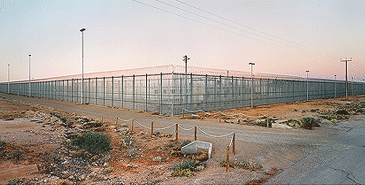 Rosemary Laing, Welcome to Australia from 2004
Butt these are a stark reminder what the detention of aslyum seekers would involve. They suggest harsh penal treatment.
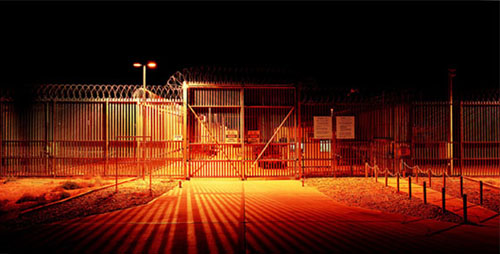 Rosemary Laing, Welcome to Australia from 2004
We do not want to forget this history, even if the cultural conservatives say critics of the camps and their harsh treatment of asylum seekers hate their country and are un-Australian. Australians, these conservatives say, ought to feel pride in their achievements in protecting the country's borders and fighting would be terrorists.
|


Gary,
I've often wondered whether those who advocate in favour of these detention conditions would be capable of directly participating in the process themselves. If they held the keys would they be so ready to treat fellow human beings this way?
It's somehow easier to imagine Arendt's observations on banality operating among a different people in a different country at a different time with different victims.
There are obvious differences between Auschwitz and Woomera and I think it's extreme to compare them. The similarity for me lies in the notion that it's perfectly acceptable in some quarters to treat people this way on the grounds that we're just protecting ourselves from something we see as somehow polluting.