|
April 30, 2008
When I was traveling through the high country in Canterbury and Otago I kept on recalling some of the early paintings by Colin McCahon. He had started out as part of the cultural nationalism of the Canterbury regionalist school, which represented rurality within a pastoral tradition in the 1930-40s, and increasingly shifted to a more abstract style.
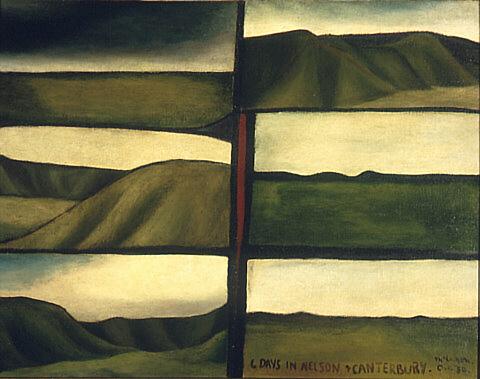 Colin McCahon Six days in Nelson and Canterbury, 1950, Oil on Canvas
The turn to abstraction came from stumbling into modernism---Cezanne and Cubism--through the filter of well-thumbed copies of The Illustrated London News and other NZ painters. Derided and misunderstood for most of his career, by both the art establishment and the general public in a provincial culture, he is now generally seen New Zealand's first and greatest modernist.
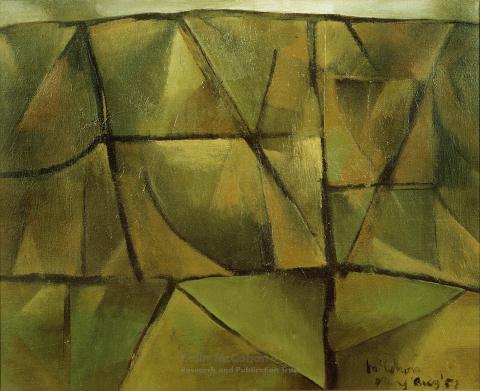 Colin McCahon, Canterbury landscape, 1952, oil on canvas
McCahon's latter work explored religious themes written in a graffiti style based on the biblical graffiti that was often scrawled across the walls and outhouses of the New Zealand landscape. Sometimes long tracts were painted onto huge outcrops of rock.
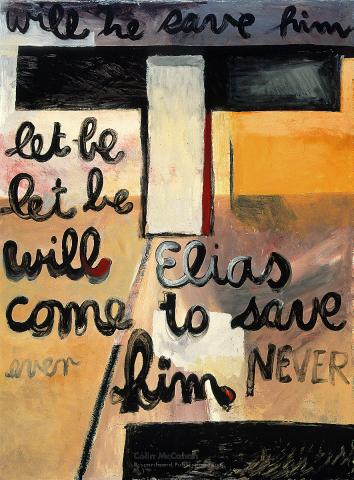 Colin McCahon, Will he save him, 1959, Oil on canvas
Today McCahon has the beginnings of an international reputation
|


