|
June 13, 2008
In classical Romanticism of the 19th century the artist's landscape is that of the artist's subjectivity with objects in the external landscape used as a metaphor for constructing the interior of the humanist self ( in the mind rather than the body). The emphasis is less on being in the world than being the subject who constitutes the world.
This is a literary world that is hostile to the mechanical, eye-driven, arts which is seen in terms of the despotism of the eye---heart-felt rejection of the visual technologies of their day: Romantic ideology was constructed not in opposition to the enlightenment rationalism of the eighteenth century, but as a reaction to the visual culture of modernity being born.
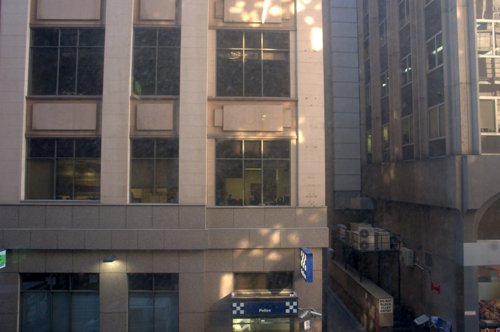 Gary Sauer Thompson, Flinder Lane, Melbourne CBD, 2008
Since then we have the crowding of people in cities, the hurry, the helter-skelter, the proliferation of news and sensational writing,—matters that Walter Benjamin observed. Benjamin added the insight that modernity did not augment perception and sensation by the addition of new media but the contrary of that, that the media actually impoverish our capacity to feel directly and for "the meanest flower."
In modernity we move from the overlap of individualism, consumerism, and the beginnings of a technology-driven entertainment industry based on visual pleasure to the familiar techno-visual dystopia of isolated clumps of incommunicados (formally known as families) who sit together cemented by nothing more than their addiction to television in a windowless room.
Modern life is one where the modern condition of mental life is bereft of stabilising notions of the real. Without such notions we are placed in a dream-world of phantoms and spectres. Modern life has become phantasmagorical or uncanny.
|


Gary
interesting about the 19th century Romantic literary reaction against modern technologies of the visual.