|
July 20, 2008
Holidays are coming up and I'm going to revisit the Corrong and the Murray River in order to take shots of the decline in ecological health. The decline is partly due to the River Murray being fed by the high country in Victoria/NSW where rainfall has been well below average, plus the over allocation of water licences to irrigators by state governments.
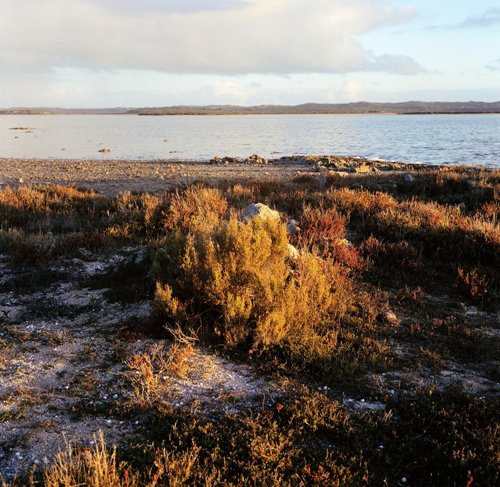 Gary Sauer-Thompson, Corrong National Park, 2007
The drought is not easing in the southern Murray-Darling Basin and it is worse than that of 1895 and World War Two. This drought, according to a policy consensus, is due to the impact of climate change. The higher temperatures have accelerated evaporation, created drier ground conditions and lead to less runoff.
Monthly inflows in the year to June are tracking close to, or below, those of 2006-7, which was the worse on record. The storage levels --water held upstream in storage during winter to release when demand from irrigators increases--- are trending towards record lows in August. The two years to May 2008 were the driest 24 month period on record for total inflows into the river.
The situation has never been worse at the mouth of the basin - South Australia's lower lakes in terms of ecological health., While there should be enough water to meet critical human needs up until next year, governments are working on what to do beyond that.
The water is sea water that comes into the channel via the Murray Mouth, only because the two dredges are working 24/7 to keep the mouth open. It hits the barrages that keep the lower lakes "filled" with fresh water from the River Murray.
Only there is no water coming down the river due to the lack of rainfall. So what stored water there is, is slowly evaporating. The policies to address this leave much to be desired.
|


Gary
I was down at the Murray Mouth the other day and the tides are very high. The sea water south of the barrages is higher than I have ever seen it.
High tides or rising sea levels?