|
August 24, 2008
Polixeni Papapetrou presents excerpts from her own lives through dramatized scenes of children playing not so innocent games, inspired from her childhood in Australia. Some of the images in series are expressions of hauntology.
The 2006 series Haunted Country,which takes as its subject children who have wandered into the bush and got lost, is good example:
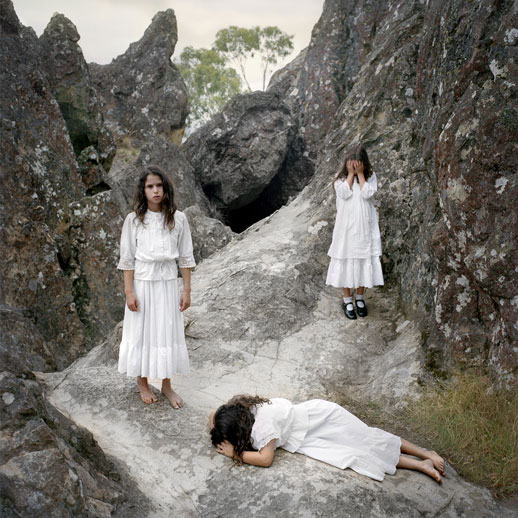 Polixeni Papapetrou, 'Hanging Rock 1900 #3', 2006, pigment ink print
Though Papapetrou's work is a form of personal remembering, her images are located within our cultural remembering about historical accounts of lost children in Australia’s rugged environment. They refer to the fear and folklore about being lost in the Australian Outback.
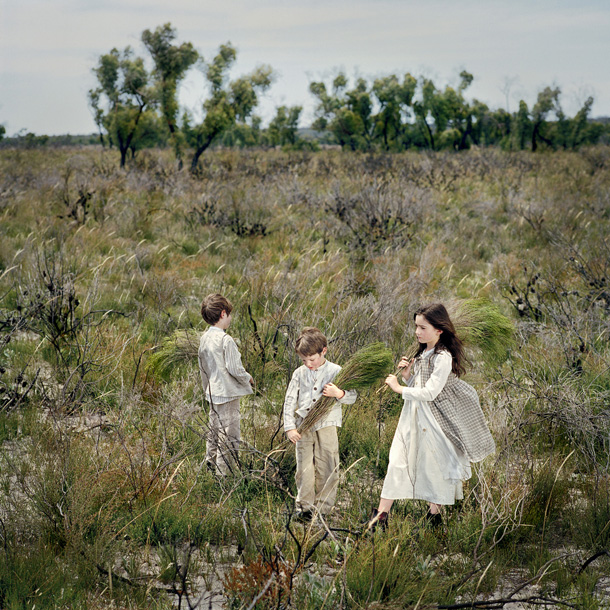
Polixeni Papapetrou, The Wimmera, 1864 #1, 2006
Papapetrou considers the landscape as a medium in which she can explore ideas about the contemporary social landscape of childhood. She comments about her Haunted Country series that:
The figure of the bush-lost child is one of the most poignant themes in Australia’s cultural remembering. My desire was to create photographs that embodied the harrowing psychological aspects of these stories. I wanted to draw the viewer into this emotional space, experience the undercurrent of the psychological drama unfolding, and make connections between past and present consciousness about land and country.
The metaphor of the bush-lost child is also a way to reflect upon other ways that children become lost to adults. The artist uses the landscape as a visual metaphor as a space without constraints and a place where children can test and define their individuality. The depth and complexity of the natural world, ranging from an Arcadian ideal to the darker haunts that children once frequented, provide a way of reflecting on the idyllic and shadowy aspects of growing up.
This aspect is explored in her 2008 series, Games of Consequence.
|


