|
October 17, 2008
The Kingston Foreshore Development in Canberra aims to transform 37ha of under-utilised industrial land on the southern shore of Lake Burley Griffin into a vibrant, cosmopolitan place with a unique waterfront life style and supporting a community that will grow around the residential and leisure activities within the precinct. The site was occupied by numerous derelict buildings and contaminated with a range of materials reflecting its previous industrial use. The whole development is to be finished by 2010.
Apart from these Kingston Apartments modernism came late to Canberra's domestic architecture despite Walter Burley Griffin and the brutalist, concrete modernism of the High Court of Australia and the National Art Gallery. The above apartments on Lake Burley Griffin are part of the Kingston Foreshore Development in the "Bush Capitol."
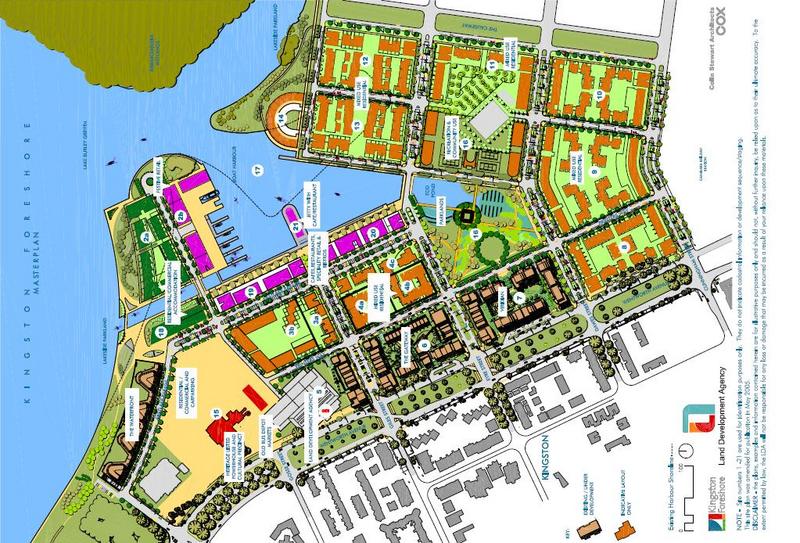
The development publicity around the landmark development of Kingston Foreshore celebrates it as bringing together the very best in living and lifestyle and the historical part of Canberra’s much-desired inner-south, rapidly becoming the city’s premier neighbourhood. Kingston ias achieving the right population density and is becoming a highly desirable place to live, because the small townhouse people to walk to the shops and walk to their recreation.
What is not mentioned so often is that suburban Canberra had become a city suspicious of change as planners fight for higher density and more housing choices in the city, suburbs and on the shores of Lake Burley Griffin. Over the past 20 years Canberra has changed from the glory days of abundant resources and professionals with good urban planning to a city with a tentative territory government struggling under the planning workload.There seems to be a resigned acceptance to sprawling suburbs.
|


Gary,
I thought that the original idea of the "walk to work' concept in Canberra was that of the National Capital Authority. Their "walk to work' concept was at the root of the satellite city plan when Woden and Belconnenn were built. The idea was that people would live in those decentralised localities, and that employers (mainly government) would establish locally.