|
December 21, 2008
It's been a while since I've looked at the archive of Landsat images of Earth from space. From memory I had been exploring the earth as art archive.
This image is of Death Valley, which lies between the Panamint and Amargosa mountain ranges in eastern California. The valley is the lowest, driest and hottest place in the United States.
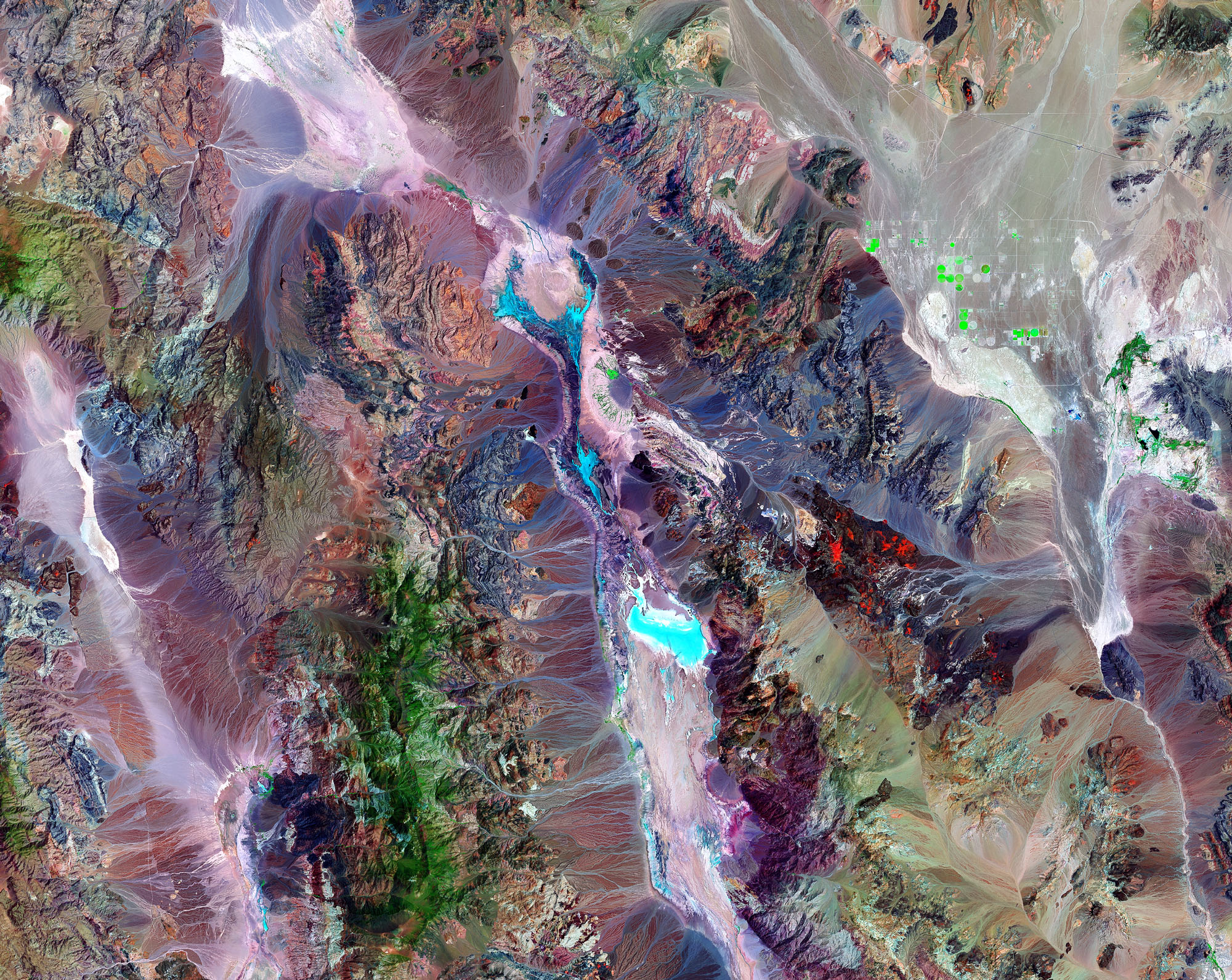 Landsat, Death Valley, California
Landsat reinforces the conventional view that conventional photography is the result of a mechanical process--- as a mechanical eye to be used for the replication of facts---and so the creativity in the work is minimal. In reponse, many photographers reduce aesthetics to technique and craft; whilst others deny that photography has any connection to asethetics despite many Landsat image having 'significiant form' and rely on a lot of computer post processing.
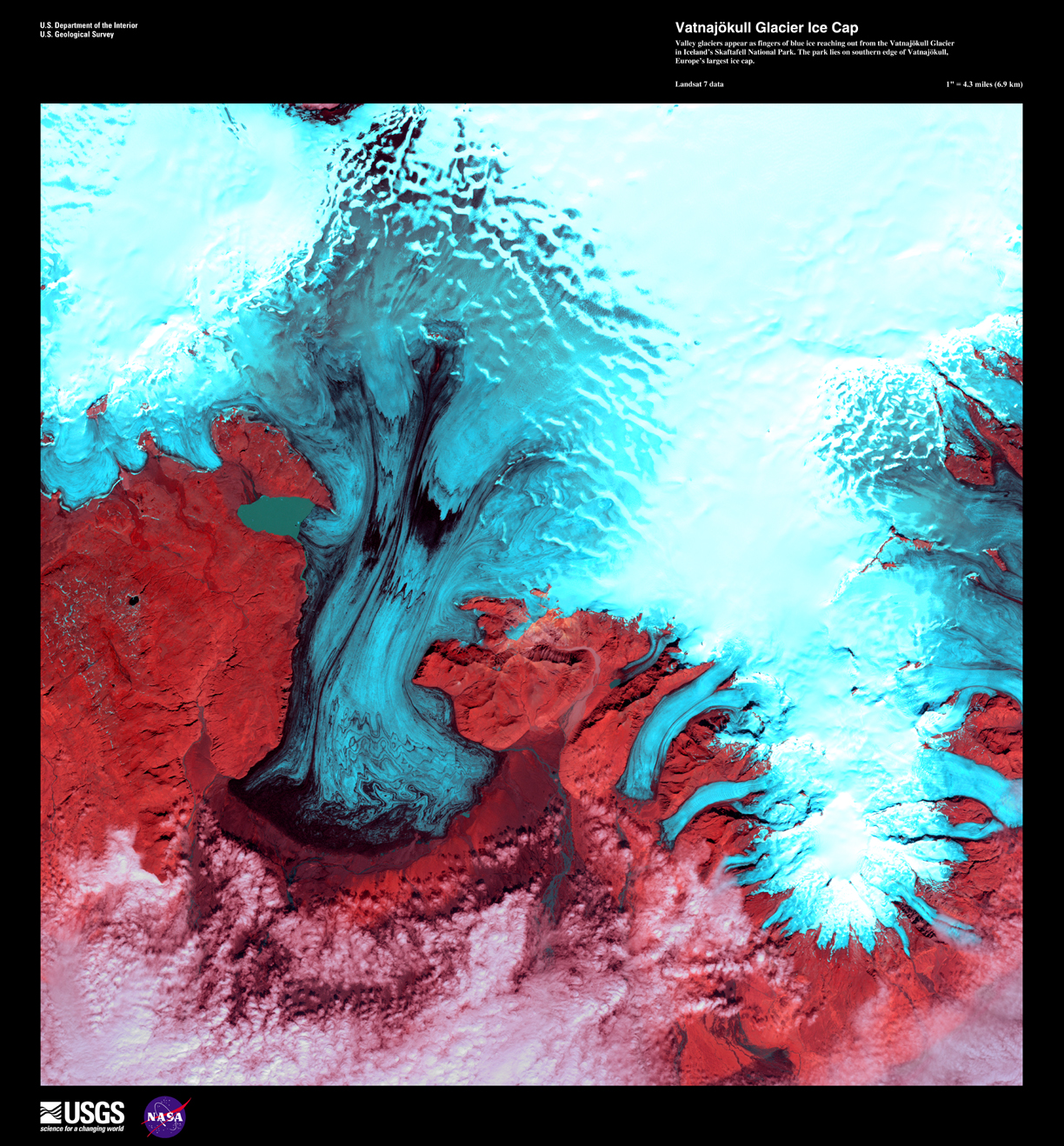 Landsat, Vatnajukull Glacier Ice Cap, Skaftafell National Park, Iceland, 1999
A core issue in this kind of discussion is the idea of science as objective and art as subjective and so on. Tis much better to argue that all images, including scientific images, should be analysied, critiqued, as part of visual culture studies that recognizes recognizes the predominance of visual forms of media, communication, and information in the postmodern world. Our experience of culturally meaningful visual content is that it appears in multiple forms, and visual content and codes migrate from one form to another:
print images and graphic design
TV and cable TV
film and video in all interfaces and playback/display technologies
computer interfaces and software design
Internet/Web as a visual platform
digital multimedia
advertising in all media (a true cross-media institution)
fine art and photography
fashion
architecture, design, and urban design
We learn the codes for each form and code switch among the media and the "high" and "low" culture forms. Our experience of images today mainly through photographic means, or images encoded as photographs. and we erecognize that digital images now dominate production of images in every medium. We ar emoving into an era of "post-photography" photography in which images and film imitate photography and camera-based images, but are entirely digital in composition and viewable output.
|


Henry Holmes Smith, had plenty to say about these issues, all pre-digital too.
http://www.librarything.com/work/1016808/book/3384207