|
April 26, 2009
It is true, as The Age points out, that the resurgence of Anzac Day and its popularity among the young:
suggests a collective willingness to separate political ideas about the worthiness of the conflict from the respect shown to the men and women who served...As a nation, we appear to have learnt the bitter lesson of Vietnam: that a great deal of damage is done when we blame soldiers for obeying the orders of their government. It is also encouraging that although Anzac Day could well serve as a de facto national day, it has not become an occasion for bombastic military displays. The sacrifice of the soldiers is its focus and gives the day its emotional depth.
So Anzac Day can serve as an ethical touchstone to judge other aspects of our national life and the way we view others:
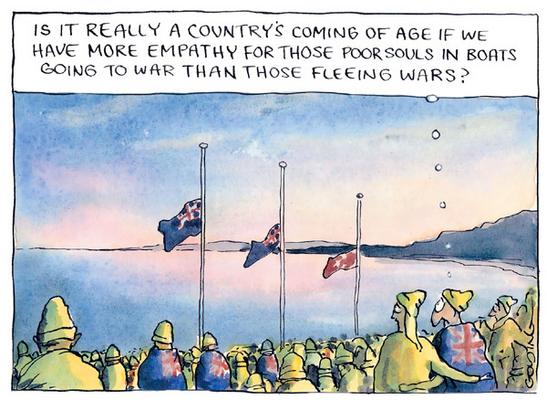 Matt Golding
Though Anzac Day has not become an occasion for bombastic military displays there are grounds for reservation and concern. It is more than just publicly remembering the heroic side of Australia's experiences of war - our diggers' eagerness to enlist, their courage in battle, their mateship and their tragic but noble deaths.
As Marina Larsson observes in The Age:
The iconic Anzac is a youthful, able-bodied man with a magnificent physique - not a disabled "wreck''.In the Anzac legend, there is little room for the realities of war, of being blown to pieces, machine-gunned or bayoneted. Even today, official speakers seldom speak at length about soldiers who were "unsuccessfully killed'' and lived with the scars to prove it.
The Anzac myth is one in which we remember how the 60,000 "glorious dead'' supposedly gave birth to the nation, but we do we not similarly honour the 90,000 young men who were disabled giving birth to the nation.
|


Anzac Day can serve as an ethical touchstone to judge other aspects of our national life and the way we view others.: i agree! Great post!