|
April 17, 2009
Wayne Barrar was born in Christchurch in 1957. He completed a Bachelor of Science from the University of Canterbury in 1979 and a Post Graduate Diploma of Fine Arts at Elam School of Fine Arts, University of Auckland in 1996. He is now Director of Photography at Massey University.
Barrar's subject as a photographer is the New Zealand landscape. He is less interested in the glories of nature ( the ‘untouched nature’ that is touted in ads and slogans about New Zealand) and more a interested in the relationship between culture and nature, and in particular, the marks human beings make on the landscape. In this picture we have the way that the iconic landscape is presented for the tourist gaze.
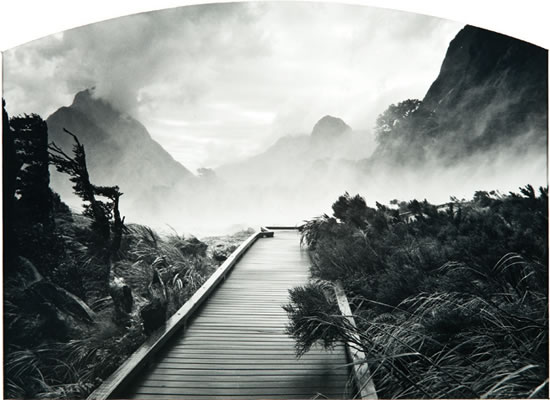 Wayne Barrar, Beneath Bowen Falls To Mitre Peak, Fiordland, 2000, Silver gelatin print, selenium toned
In his Shifting Nature he photographs a landscape harnessed to serve human needs and demands. It is the altered landscape ad he is conscious of photography's implication as a colonizing agent in framing views that imply ownership and control.
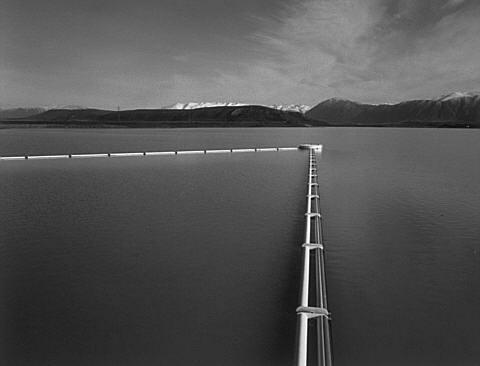 Wayne Barrar, barrier, Lake Ruataniwha, Canterbury, New Zealand,1987, gelatin silver toned print
For instance, Barrar's photographs are in oppostion to the images produced for the tourist market, which romanticised Lake Manapouri as distant, splendid and untouched by development.
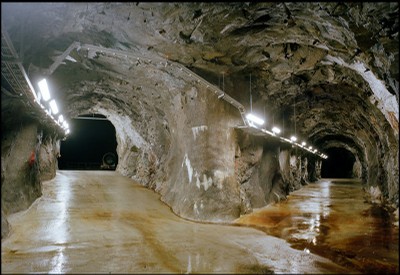 Wayne Barrar, Twin tunnels, Manapouri Underground Power Station, 2005, inkjet print
Barrar does not suggest any kind of achievement of industry over nature. He works in the American topographical tradition in the mid-1970s and their approaches to the man-altered landscape have remained a touchstone for Barrar.
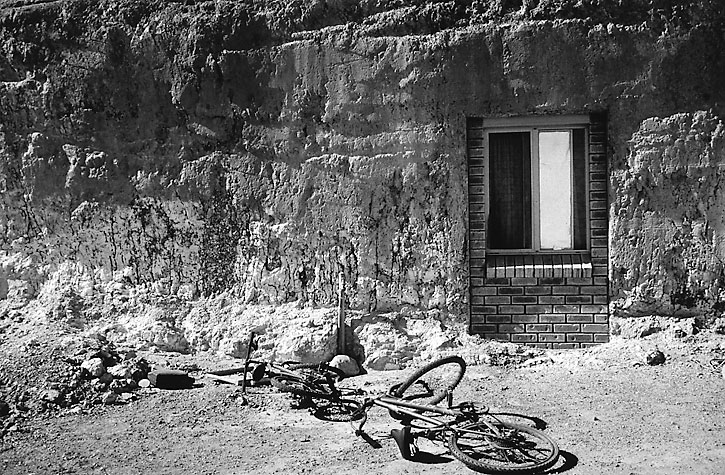 Wayne Barrar, Room frontage (underground), Coober Pedy, Australia, 2003, Toned Silver Gelatin Print
opper Peddy is billed by its tourism promoters as Opal Capital of the World, and half of South Australia's Coober Pedy township of 3, 500 inhabitants live underground. It has been an opal mining town for nearly one hundred years. The first underground homes were built by World War I soldiers returning from the trenches in France.
|


